

























































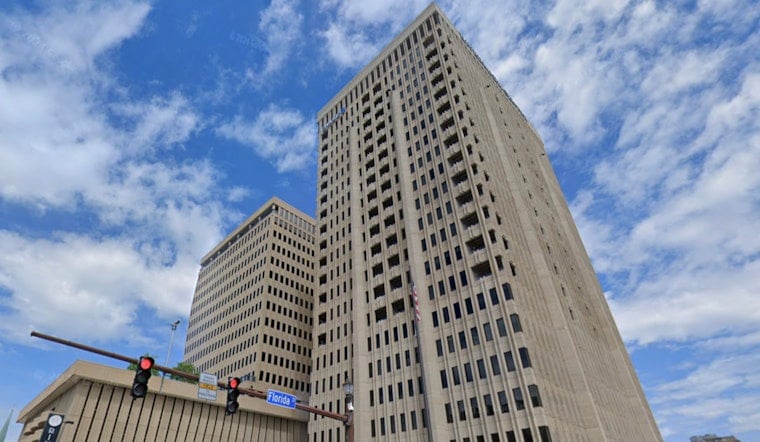
The Baton Rouge Immigration Court is back on notice that its doors are supposed to be open to the public, after volunteers documented being repeatedly turned away from hearings. Acting Assistant Chief Immigration Judge Sherron Ashworth drove the point home in a June 25 message to staff, backed by a sworn declaration filed in federal court, a rare public move in a fight over who gets to watch immigration cases. The reminder lands in the middle of a nationwide lawsuit that questions how Executive Office for Immigration Review courts handle public access.
Judge's message to staff
In a June 25 email, Ashworth told staff that “with limited exceptions, all hearings conducted at the immigration courts are presumptively open to the public,” and warned that employees who ignore federal rules could face discipline, as reported by The Lens. The email was attached to a sworn declaration in the D.C. court fight over access. Local volunteers say that written directive became their golden ticket: they began citing it when they tried to enter hearings after months of being turned away.
Court-watch volunteers' complaints
Volunteers with a local observation group and the national nonprofit The Advocates for Human Rights say those turn-aways were anything but a one-off. They documented dozens of denied entries and folded those accounts into the national lawsuit. In sworn statements, one volunteer says she was blocked 13 times between November 2025 and May 2026, while another reports being denied entry on 20 separate visits. Plaintiffs argue those numbers show a pattern at the Baton Rouge court that goes well beyond occasional confusion and underpins their request for relief.
At a hearing: 'You're not allowed to observe'
Volunteer court-watcher Jami Prince says the new directive was tested almost immediately. On June 29, she tried to sit in on an individual merits hearing and was initially told she could not attend. After she pulled out a copy of Ashworth’s email, she was eventually allowed in when no one in the case objected. The judge in that courtroom, identified in filings as Romaine White, told Prince, “I’m sorry, this is an individual hearing, you’re not allowed to observe,” before letting her stay once the respondent consented. The respondent’s asylum claim was later denied that day, according to reporting by The Lens.
What the government says
In its D.C. filings, the Department of Justice has tried to frame what happened in Baton Rouge as sporadic missteps, not official policy. Government lawyers say there was no categorical closure rule at the court and argue that statements by on-site security guards “do not accurately state the court’s policy,” according to a memorandum posted on Justia. EOIR director Daren Margolin has likewise told staff and the court that “EOIR’s immigration courts are open daily to the public,” language that appears in the agency’s filings and has been circulated in the record. The government is urging the D.C. judge to toss or narrow the requested injunction on procedural grounds.
What's next
The Advocates for Human Rights filed the nationwide case in March, asking the court to require clearer, on-the-record explanations for any closures and to restore routine access for observers. The D.C. court has already declined to grant a universal preliminary injunction. Plaintiffs say they will keep tracking what happens at courthouse doors and plan to lean on the Baton Rouge episodes as part of the broader case. Local volunteers say they now arrive at the court with printed copies of Ashworth’s email and have generally been allowed to observe since late June, though they report that occasional problems still pop up, according to local reporting by Verite News.
Legal implications
The lawsuit’s core ask is more procedural than flashy: plaintiffs want immigration judges required to state, on the record, any legal basis for closing a hearing and to give the public a chance to object. They say that fits squarely within 8 C.F.R. §1003.27 and First Amendment public access principles (see the regulation at 8 C.F.R. §1003.27). So far, the D.C. judge has refused to grant sweeping emergency relief, finding that plaintiffs have not cleared the high bar for a universal injunction. The underlying dispute over how policy translates into practice is still very much alive.
For now, Baton Rouge court-watchers say they will keep showing up, Ashworth’s email in hand, and logging any denials as potential evidence. EOIR’s manuals maintain that hearings are presumptively open, and the fight highlights how access, security and privacy concerns collide in immigration cases that frequently involve trauma and sensitive personal histories. The D.C. litigation will help determine whether those internal rules are enforced the same way from court to court or left to local habit.





