

























































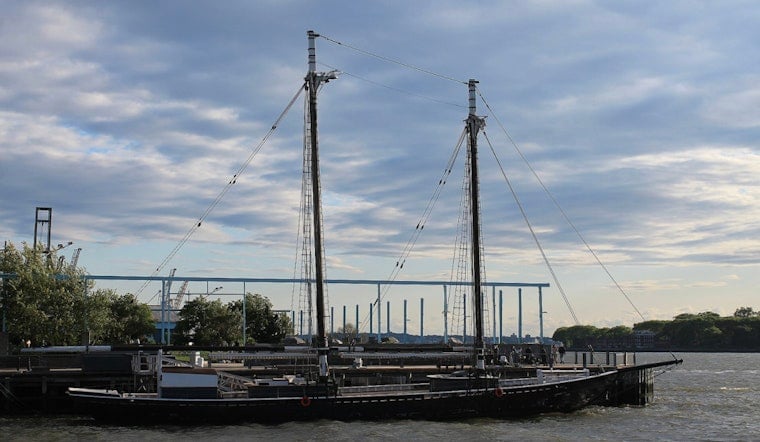
The century-old schooner Pilot, a 1924 wooden workhorse turned seasonal oyster bar, slipped under the surface overnight in the Henry Street Basin near Red Hook, leaving only its masts stabbing up through the water. Owners say no one was aboard at the time, and that crews are now working with marine professionals and city authorities to figure out how to bring the vessel back up.
Videos shot by kayakers show Pilot’s masts protruding while wooden chairs bob around nearby, and onlookers reported rotted planking along the hull. The sinking was first reported by the New York Post, which quoted the owners as saying they were “heartbroken” and confirmed that no one was hurt.
Launched in 1924, Pilot spent decades guiding ships as a Boston harbor pilot boat and was later pressed into service with the U.S. Coast Guard during World War II before sailing as a research vessel associated at times with Jacques Cousteau. Brothers Alex and Miles Pincus bought the schooner in 2015 and led a full restoration that turned her into the dockside oyster bar known as Pilot, according to Crew.
Pilot's Place on the Waterfront
In her second act, the restored schooner became a warm-weather staple on the Brooklyn waterfront, drawing diners for oysters, cocktails and prime skyline views. When the vessel arrived off Pier 6 in 2017, Brooklyn Paper framed Pilot as a new floating attraction for Brooklyn Bridge Park visitors and an instant crowd magnet.
Salvage and Preservation Questions
Owners told reporters their immediate focus is safety and salvage, and that they are coordinating “with professionals and authorities to determine how to raise Pilot,” per the New York Post. The vessel’s page on Crew notes that the schooner still retains a large portion of its original fabric and is considered eligible for the National Register of Historic Places, a status that could complicate any recovery or restoration work.
At the time of the initial reports, city agencies had not issued a comprehensive public statement, and independent video from local paddlers offered the clearest look at the scene. Salvage specialists and preservation advocates will likely have to juggle historic value, environmental risk and public safety as options for raising and repairing the vessel are weighed.





