

























































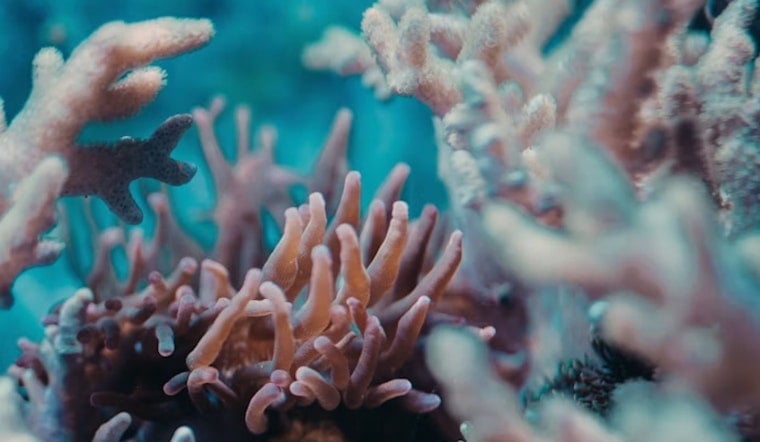
A UC Berkeley team says it has finally nailed down how microscopic algae first moved into animal cells, a twist that reshapes the origin story of the coral and algae partnership that built much of the world’s reefs. The researchers report that algae survive inside lysosome-like compartments in host cells and appear to have learned how to resist digestion, turning what is normally a nutrient-scavenging organelle into a surprisingly stable home. They add that decoding those molecular tricks could shift how scientists tackle reef restoration and coral-bleaching interventions.
In a paper published this week in the journal Cell, the authors report that symbiosomes, the organelles that house algal symbionts inside coral cells, form by fusing with lysosomes and that the algae have evolved resistance to lysosomal digestive enzymes. According to UC Berkeley News, the team isolated the symbiosome membrane and identified roughly 200 proteins on it, including transporters and proteases linked to nutrient exchange.
How algae survive inside coral cells
The study turned up an unusually high concentration of lysosomal proteins on the symbiosome membrane and highlighted a bicarbonate transporter that supplies the alga with carbon in the form it needs for photosynthesis. A community review on Sciety notes that when researchers used CRISPR to knock out that transporter in the coral Galaxea fascicularis, algal colonization failed, a direct test that the transporter is required for the partnership.
Implications for bleaching and restoration
Because many of the symbiosome components resemble lysosomal digestion machinery, the authors say that dysfunction of those proteins during heat stress could help explain why corals expel their algae during bleaching. As Letters & Science at UC Berkeley describes, the group is now tracking how the symbiosome proteome shifts under heat to identify vulnerabilities that could be targeted by restoration or assisted evolution strategies.
Why a Bay Area lab mattered
Central to the work is a one-of-a-kind coral nursery and a suite of genetic tools that allowed year-round spawning and functional tests in both corals and the anemone model Aiptasia. The Cleves lab lists its location and research focus at Cleves Lab, and related publications note support for Cleves’s work from the Gordon and Betty Moore Foundation, the National Science Foundation (EDGE grant 2128073), Revive & Restore, and a Pew Biomedical and Marine Fellowship, per Nature Communications.
The paper is available online in Cell, and the team says follow-up experiments on how heat and other stressors reshape the symbiosome could point to molecular interventions that help reefs survive a warming ocean. For now, the discovery flips the usual coral and algae narrative on its head: instead of coral building a brand-new organelle to host an alga, the algae may have simply learned to hide in plain sight inside the host’s existing digestive machinery.



