

























































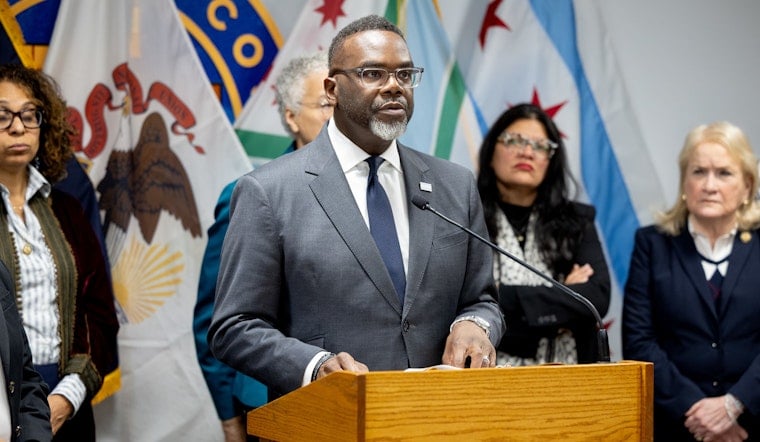
Chicago Mayor Brandon Johnson did not wait long to celebrate a major Supreme Court ruling on birthright citizenship. On Tuesday, moments after the opinion dropped, Johnson praised the decision reaffirming that people born on U.S. soil are U.S. citizens, saying no child should grow up wondering whether they belong in the only home they have ever known. He framed the ruling as a protection for immigrant families and reiterated that Chicago will remain a welcoming city, a reminder of how quickly national legal fights shape local politics at City Hall.
Today's Supreme Court decision reaffirms a simple but fundamental truth: if you are born in the United States, you are a Citizen of the United States. No child should grow up wondering whether they belong in the only home they have ever known. Chicago is and will remain a https://t.co/MKKPclwOcj
— Mayor Brandon Johnson (@chicagosmayor) June 30, 2026
What the Supreme Court decided
The Supreme Court on Tuesday struck down President Donald Trump’s 2025 executive order that would have denied citizenship to many babies born in the United States. Chief Justice John Roberts wrote the majority opinion, concluding that the Fourteenth Amendment’s Citizenship Clause, reinforced by century-old precedent such as United States v. Wong Kim Ark, makes children born on U.S. soil citizens at birth. As outlined by SCOTUSblog, the court rooted its reasoning in both the constitutional text and long-standing historical practice.
Mayor Johnson and local leaders respond
In a post on X, Johnson said the ruling "reaffirms a simple but fundamental truth" and stressed that Chicago will remain a welcoming city. Across Illinois, other officials followed his lead. Gov. J.B. Pritzker, U.S. Sen. Dick Durbin and members of the city’s congressional delegation praised the decision as a safeguard for immigrant families, according to reporting from FOX32 Chicago. The rapid-fire statements showed how quickly the ruling became a political touchstone at the state level.
Why it matters for Chicago families
Coverage of the decision has stressed the practical stakes. Research cited by national outlets estimated that more than a quarter-million U.S. births each year could have been affected by the order. The ruling keeps long-standing certainty in place for those children and their parents. The Department of Justice, while losing the legal fight, issued a memo after the ruling that directed prosecutors to prioritize investigations into alleged "birth tourism" schemes. That move signaled a potential shift in federal enforcement priorities even as the constitutional rule itself remains unchanged.
As reported by The Associated Press, advocacy groups in Illinois also hailed the decision as a protection for immigrant families, including statements from the ACLU of Illinois.
Legal takeaway
Legal analysts note that the ruling highlights limits on unilateral executive power. The justices concluded that an executive order cannot rewrite the Fourteenth Amendment and that any lasting change to birthright citizenship would require Congress or a constitutional amendment. SCOTUSblog’s opinion analysis walks through how the justices divided, and how the majority blended historical and statutory reasoning to reach its conclusion.
What City Hall may do next
Johnson’s administration has already moved to insulate Chicago from aggressive federal immigration tactics. Earlier this year, City Hall joined litigation challenging federal practices, a posture documented when the city Chicago Sues Federal Government. With the Supreme Court reaffirming birthright citizenship, city officials say they will keep enforcing local sanctuary and service-access policies that are meant to steady immigrant households while the national political fight over immigration and citizenship continues.





