

























































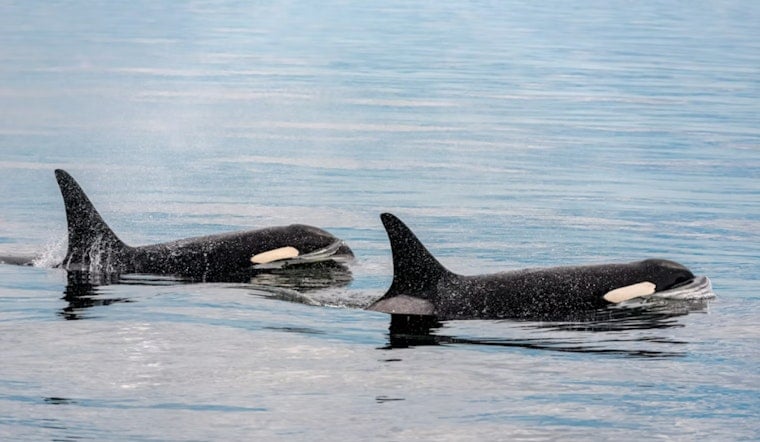
At least six orcas cruised inside Elliott Bay on Monday morning, turning the Alki Avenue promenade into an impromptu whale-watch hot spot. Beachgoers and early-morning walkers reported repeated blows and dorsal fins close enough for quick snaps from the shoreline. The brief visit added to a growing string of sightings across central Puget Sound this spring and kept local whale-spotting networks busy.
Spotting confirmed
According to the West Seattle Blog, naturalist Kersti Muul counted at least six whales off Alki Avenue and asked readers to send in photos and follow-up observations. That early-morning tip helped volunteers and researchers start piecing together the pod's path through the bay.
A pattern this season
This was not a one-off appearance. Volunteer groups and regional outlets have logged multiple orca passes into Elliott Bay and nearby waters in recent weeks, including a June 28 killer whale commute that took whales past Blakely Rock toward the downtown waterfront. Community platforms such as Orca Network collect crowd-sourced reports and photos that researchers use to confirm identifications and travel routes. That combined, shore-based detective work is helping distinguish repeat visitors from one-off transits.
Which whales were they?
Most of the animals that slip into Elliott Bay are Bigg's, also known as transient, killer whales, the mammal-eating ecotype, rather than the salmon-dependent Southern Residents. Scientists have also noted several unusual, Alaskan-linked transient groups in the region this year. Live Science has reported on researchers' efforts to biopsy and photo-ID these mammal-eating visitors as they move through Puget Sound. NOAA Fisheries outlines the different orca ecotypes and stresses that viewers and mariners give whales enough space so foraging and travel are not disrupted.
How to watch safely and what’s legal
State and regional guidance is clear. Washington legislation and related implementation measures provide stronger protections for endangered Southern Resident killer whales, including requirements that boaters keep large separation distances in many situations, as explained in recent local coverage of SB 5371. The Be Whale Wise campaign spells out approach-distance guidelines and expected behavior for other whales, including recommended separation zones and slowing to low speeds within a half-mile, to cut down on noise and harassment. Observers and mariners are urged to avoid positioning vessels in a whale's path, reduce engine noise, and report sightings so managers and responders can act.
How to report sightings
If you saw the animals, officials want your evidence. Document what you can and submit photos or a report: Orca Network accepts uploads, and the U.S. Coast Guard's Cetacean Desk and partner agencies encourage using apps such as WhaleReport to log sightings and alert mariners. Keeping a respectful distance and following Be Whale Wise guidance helps protect both the animals and people on the water while scientists study where these groups are coming from.




