

























































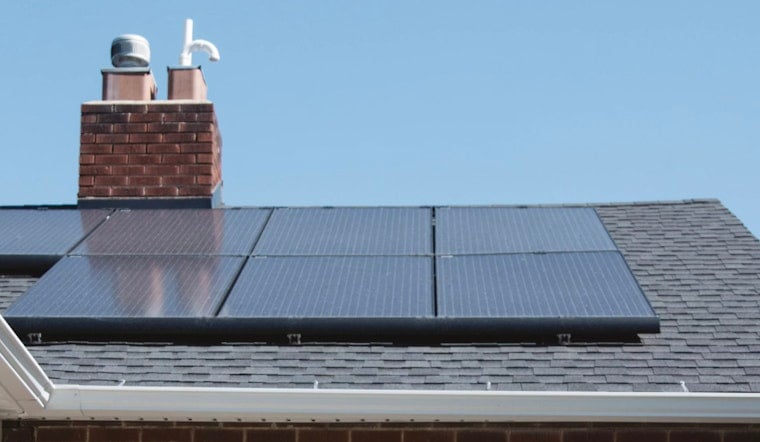
Fieldston Power, a Bronx-based energy startup, has quietly built something pretty big on New York City’s rooftops. The company has flipped on a community distributed solar network that now serves 72 rent-stabilized apartment buildings across the city, including 48 in the Bronx. The portfolio, the company says, produces roughly 3.3 megawatts of rooftop solar capacity and enrolls more than 550 low-income households in community solar subscriptions that trim about 20% off the supply portion of their Con Edison bills. Fieldston financed the roof repairs, solar arrays and wiring so landlords did not have to put up money upfront, and the project arrives with a roughly $200 million pipeline that aims to expand to around 1,000 additional rooftops over the next four years. City and federal officials gathered in the Bronx this week to mark the “powering on” of the project and to present it as a model for financing Local Law 97 compliance.
How the model works
Fieldston’s approach starts with long-term rooftop leases. The company signs on with building owners, pays to replace leaky roofs and installs solar systems that send power back into the grid rather than directly into each individual building. By bundling many smaller rooftop systems into one institutional-scale portfolio, Fieldston says it can attract investors and tap into federal and state incentives that make the projects pencil out financially. As reported by Fast Company, the company also plans to add battery storage so the network can help shave peak demand on the city’s electric system.
What tenants and owners get
The completed portfolio supplies community solar credits to more than 550 low-income households. Fieldston says those subscribers will see discounts of up to 20% on the electricity supply portion of their bills, translating to roughly $90,000 in combined annual savings across the group. To keep installations moving quickly, the company has already purchased and staged tens of thousands of panels and inverters, a move it says will accelerate deployment. The network currently spans 72 rent-stabilized buildings citywide, 48 of them in the Bronx. As reported by Bronx Times, Fieldston is relying on those advance equipment purchases to speed future rooftop installs.
Local Law 97 and the stakes
Fieldston’s rollout lands as many building owners start to grapple with Local Law 97, New York City’s climate law that limits greenhouse gas emissions for most buildings larger than 25,000 square feet and began its first compliance period in 2024. Owners that overshoot their emissions caps can be hit with civil penalties. According to the NYC Department of Buildings, fines are calculated at $268 for every metric ton of CO₂-equivalent above a building’s cap. For owners of older rent-stabilized properties, Fieldston argues that community distributed solar paired with roof remediation offers one way to cut emissions and potentially avoid large fines without immediate capital outlays from landlords.
Officials and next steps
U.S. Rep. Ritchie Torres joined Fieldston and partner Chestnut Holdings at a July 7 event in the Bronx to celebrate the project’s completion, framing it as a case study in how policy and private capital can work together. In a press release from Rep. Ritchie Torres's office, officials said the portfolio is projected to produce roughly 3.73 gigawatt-hours of electricity a year while benefiting more than 550 low-income households. Fieldston says the completed systems were delivered without upfront capital from participating landlords and that the same $200 million pipeline behind this portfolio is intended to scale the model across the city.
Why scale matters
Fieldston told Fast Company that the current installations cover about 600,000 square feet of rooftops and produce roughly 3.5 megawatts today. The company says its pipeline would grow that footprint by roughly tenfold, potentially adding tens of megawatts of distributed solar across neighborhoods that have historically been left out of renewable energy investment. Supporters argue that broader deployment could help shave peak demand on the grid while delivering some bill relief for renters. Critics counter that even with incentives, there may still be retrofit costs that are not fully covered for building owners. The coming months will test whether the approach can deliver sustained savings for tenants while keeping building operations stable, as reported by Bronx Times.



