

























































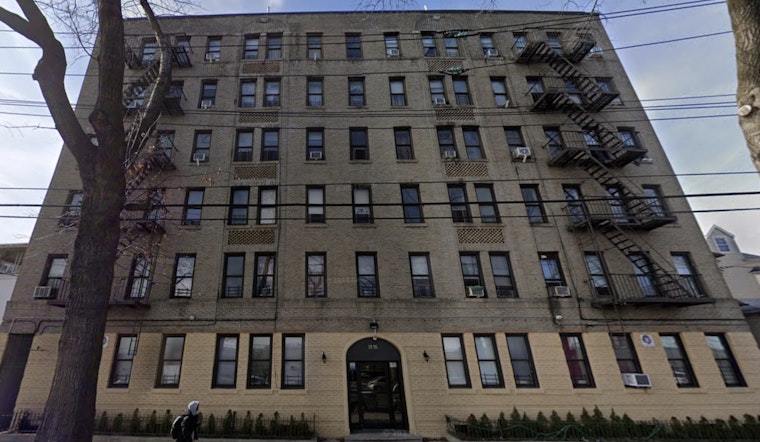
A Kingsbridge Heights tenant says his apartment has become so toxic that he now beds down on the sidewalk across the street instead of in his own home. Tyrone Headlamb says city inspectors confirmed hazardous lead and long-running mold problems in his unit, and he still does not feel safe going back inside.
Headlamb says medical tests showed mold in his system and that the Department of Housing Preservation and Development found a Class C lead problem after inspecting every room. He alleges building staff responded by covering damaged areas with sheetrock instead of removing contaminated material, a quick fix that he believes left the underlying hazards in place.
As reported by News 12, Headlamb tried to force the issue in early June by filling his building lobby with documents, photos and written complaints aimed at management. HPD inspected his unit after that broadcast. The station reports that inspectors tested every room and that HPD issued a Class C lead violation for the apartment. Building management told News 12 that repair crews are on site and that it may transfer Headlamb to another unit if HPD continues to find violations.
What a Class C lead violation means
Under city rules, a Class C lead-based paint violation is considered an “immediately hazardous” condition that must be abated and documented by the owner. If a landlord fails to act, they can face fines or city-run remediation, as the Department of Housing Preservation and Development explains.
HPD regulations require certified lead abatement work rather than cosmetic fixes, and the agency can step in to repair serious hazards and bill owners through programs such as the Emergency Repair Program when necessary.
Building record and neighborhood context
Public records compiled by housing watchdogs show that 3115 Sedgwick Avenue has drawn repeated HPD and Department of Buildings complaints and enforcement actions in recent years, including emergency mold and water-leak service requests tied to apartment 4C, according to Displacement Alert.
Citywide analysis also shows that the Bronx logs some of the highest volumes of mold complaints in New York City, a pattern tracked by RentHop and cited in local coverage. Headlamb’s case slots neatly into that broader picture of aging buildings and stubborn moisture problems.
Headlamb's health and what management says
Headlamb told News 12 that the conditions in his apartment have sent him to the hospital multiple times. He says doctors suspect mold exposure contributed to headaches, vision issues and memory problems. “It ruined my life,” he told the station, adding that he and his son now wear masks at home because of air-quality concerns.
Building management told News 12 that crews are working on repairs and that the situation remains under review.
The city’s findings place legal responsibility on the landlord to certify proper abatement or face enforcement. Tenant advocates say cases like Headlamb’s highlight a familiar gap between inspection and full remediation in older rental buildings, where violations on paper do not always translate to swift, thorough cleanup. In the coming weeks, HPD actions or housing-court outcomes will determine whether Headlamb is relocated or whether the landlord completes certified abatement that satisfies city inspectors.



