

























































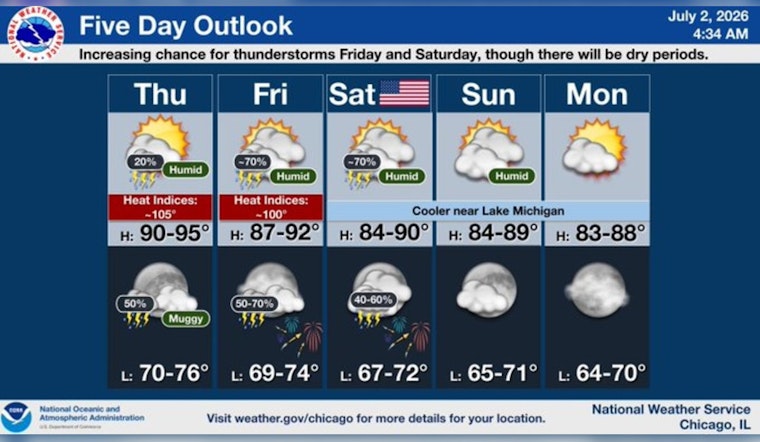
Chicago is roasting under serious summer heat on Thursday, July 2, 2026, with mostly clear skies this morning set to give way to a high near 96°F and a heat index that could feel closer to 102°F this afternoon. The National Weather Service has put an Extreme Heat Warning in place through midnight CDT tonight, so anyone without reliable air conditioning should make a concrete plan to cool off.
Afternoon Heat And The Warning
According to the National Weather Service, much of Cook County is under the warning, with highs around 96°F and peak heat-index values expected in the 100 to 105°F range. Overnight will not offer much relief either, with a muggy low near 77°F in the forecast. That kind of sticky, never-quite-cooling-off night is exactly what can drive up the risk of heat-related illness, especially for older adults, infants and people who work or spend long hours outside.
Late Storms Could Bring Short Relief
Some showers and a few thunderstorms could pop up after about 9 p.m. on Thursday, July 2, 2026, with a better shot at rounds of storms on Friday, July 3, 2026. Any rain that develops tonight is expected to be on the lighter side, while Friday’s storms carry a higher risk for gusty or damaging winds. If you have outdoor Fourth of July plans, it is worth lining up a backup option and tying down or bringing in anything that could blow around. Humid nights and up-and-down weather are expected to hang around into the holiday weekend, so it is smart to keep an eye on forecast updates.
Where To Cool Off
If you need a place with air conditioning, call 311 or check the City of Chicago for cooling-center locations and hours. Try to avoid strenuous activity during the midafternoon peak, keep an eye on elderly neighbors and pets and never leave children or animals in parked cars, since interiors can reach lethal temperatures within minutes.



