

























































Cincinnati’s most unlikely power player in a big-ticket fundraising campaign is a tattered blue silk flag that predates the city itself. The 1st Pennsylvania Battalion banner, painted with a bundle of 13 arrows and the Revolutionary motto “United We Stand,” has quietly become one of Cincinnati Museum Center’s buzziest artifacts. Look closely at the canton and you can still see traces of a British Union Jack that was later swapped out for red and white stripes, a stitched reminder of a country in transition. Museum leaders are now leaning on that story, and the flag’s national profile, to argue for more space and cash to protect other fragile pieces of history.
The banner was created for the 1st Pennsylvania Battalion in 1775 and is one of only about 30 Revolutionary War flags still known to exist. Its 13-arrow motif and “United We Stand” slogan sit at the center of the silk field, according to the Museum of the American Revolution. The museum’s online exhibit also notes that the original canton once held the British union, which was later replaced with stripes to mark allegiance to the new United States.
From Pennsylvania To Fort Washington
Local lore ties the flag to Josiah Harmar, a young officer who is said to have carried it west after the war and later ordered the construction of Fort Washington in Losantiville, the settlement that became Cincinnati. Oral history says Harmar flew the banner over the fort’s wooden stockades. Curators are careful to point out there is no surviving paperwork that proves that exact scene, even if the story has stuck around town. The city received the flag as a gift from one of Harmar’s descendants in 1926, loaned it to the Cincinnati Historical Society in 1976 and formally transferred it into Cincinnati Museum Center’s collections in 2025, according to the Cincinnati Business Courier.
On A National Stage
The banner stepped out of local legend and onto a national stage in spring 2025, when it traveled to Philadelphia for the “Banners of Liberty” exhibition at the Museum of the American Revolution. That show pulled together roughly half of all surviving Revolutionary flags, a rare gathering of the nation’s earliest symbols, as reported by the Philadelphia Inquirer. Exhibition materials there list the 1st Pennsylvania Battalion flag as a loan from Cincinnati Museum Center and spotlight its distinctive arrows-and-motto design, a reminder that some of the country’s founding-era touchstones live far from the coasts.
Why The Vontz Center Matters
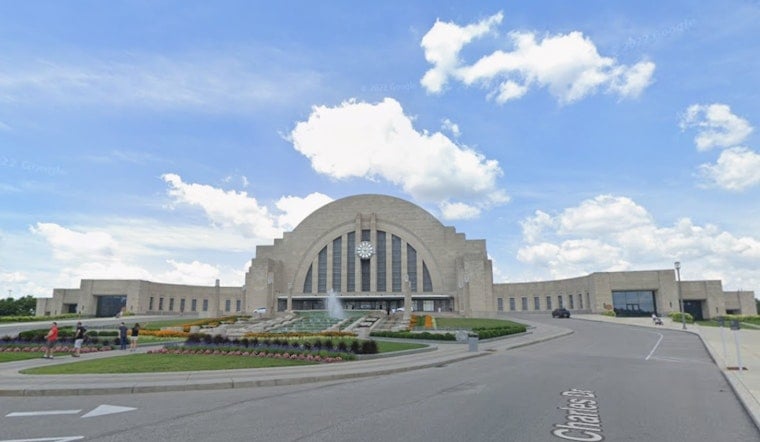
Back home, the flag is doing quiet work behind the scenes of a major building push. Cincinnati Museum Center is in the middle of a $65 million capital campaign to create the Vontz Family Research, Education and Collections Center inside a 200,000-square-foot former Heidelberg Distributing facility next door to Union Terminal. The project is designed to pull conservation labs, storage, research and public access into one home, according to Cincinnati Museum Center. In a press release announcing the naming gift, the museum called the Vontz center “an investment in our community’s stories” and laid out plans for the facility and ongoing fundraising, as detailed by Cincinnati Museum Center.
For Cincinnati, the Revolutionary-era banner is proof that local collections can carry national weight, and that preserving them is not cheap. Artifacts like the 1st Pennsylvania Battalion flag sit at the heart of the museum’s pitch to donors as it works to build out the Vontz center, a case it has made explicitly in its campaign messaging, per the Cincinnati Business Courier.




