

























































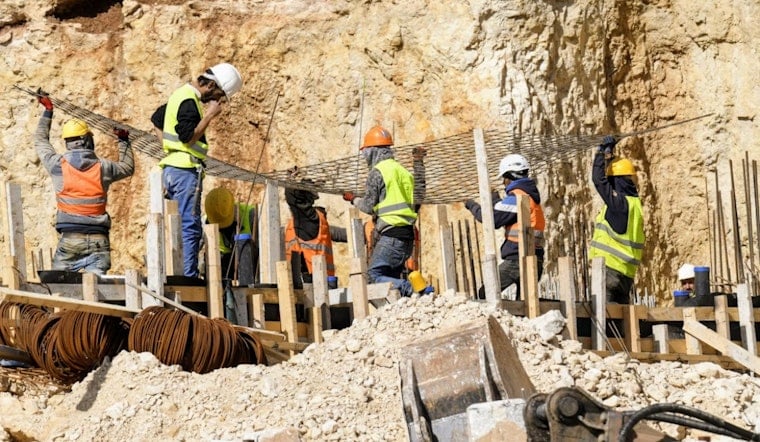
Colorado's construction workers are dying from drug overdoses at more than twice the rate of workers in other fields, according to newly released state data that has safety leaders on edge.
The numbers come from Colorado's State Unintentional Drug Overdose Reporting System, which shows an estimated 93.5 overdose deaths per 100,000 people whose records list construction as their industry, compared with 43.5 deaths per 100,000 workers across all industries combined. Safety officials and trade group leaders say the gap tracks with what they see on job sites every day: injuries, long hours, financial strain, and constant stress that can push some workers toward substance use and, eventually, overdose.
The figures are part of a SUDORS summary compiled by the Colorado Department of Public Health and Environment. The agency notes a key caveat. The industry listed on a death record often reflects a person's usual or longest-held line of work, not necessarily the job they had at the time they died. That detail makes the data harder to interpret, but it does not change the stark trend among people tied to construction.
What local safety leaders are saying
Speaking with Denver7, Tadd Lindsay, director of safety and education for the Colorado Contractors Association, connected the overdose problem to the daily realities of the job.
He pointed to wages that do not always keep up with the cost of living, long shifts, and long stretches away from family as ingredients for worsening mental health in the trades. For workers who are pushing through overtime and still struggling to pay the bills, he told Denver7, "That is a really defeating feeling." On top of that, he said, common construction injuries can lead to prescriptions for pain medication, which for some workers becomes the first step on a path toward misuse and overdose.
How Colorado fits a national pattern
Colorado is not alone. A national review from the CDC's National Center for Health Statistics found that construction and extraction workers had some of the highest drug overdose death rates of any occupation in 2020, a pattern researchers link to job-related injuries, unstable schedules, and gaps in benefits, according to CDC/NCHS.
Federal researchers also flag the same data limitation that Colorado officials mention. Death certificates list a worker's usual industry, which may not match the job they held when they died. That means state and local health departments have to dig deeper to understand what is actually driving overdose deaths in specific sectors, including construction.
Industry prevention and trends
In response, unions, contractors, and safety organizations say they are trying to shift the culture on job sites. That includes stocking more naloxone at work locations, encouraging peer-to-peer mental health conversations, expanding substance use training, and pushing to reduce opioid prescribing after on-the-job injuries.
A recent bulletin from the construction safety research group CPWR and the North America's Building Trades Unions reported recent declines in overdose deaths among construction workers and credited coordinated prevention work, including employer programs and peer networks, with part of that progress, as per the CPWR/NABTU newsletter.
Where to get help
Colorado's public health pages and partner groups outline naloxone distribution programs, workplace training options, and treatment resources tailored for both workers and employers, and the SUDORS materials provide more detail on overdose patterns in the state.
If someone is in crisis, call or text 988 for confidential, immediate support. More information about the national suicide and crisis line is available from the SAMHSA's 988 Lifeline. For Colorado-specific prevention tools and overdose data, residents can turn to the CDPHE SUDORS pages linked above.





