

























































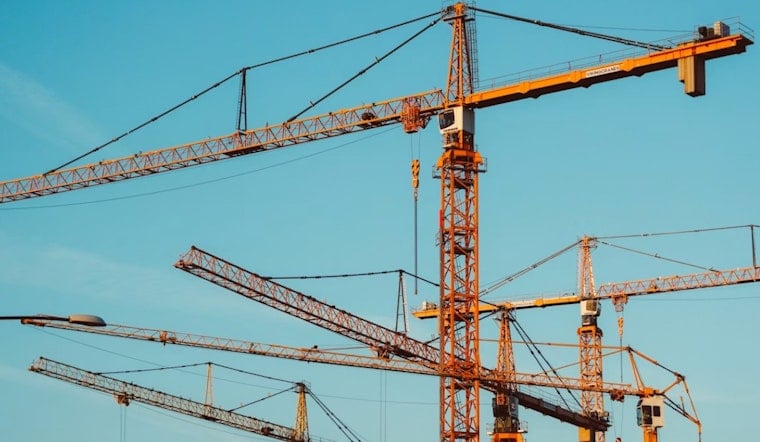
In a flurry of cranes and stretch trailers, factory-built apartment modules are being stacked into a seven-story affordable housing tower at 112 Vera Ave. in Redwood City. The on-site spectacle is turning weeks of work into days as crews lift finished living units onto a two-story concrete podium. The project, slated to add roughly 176 apartments to downtown, is shaping up as one of the Bay Area’s clearest examples of modular construction speeding affordable housing delivery.
On-site assembly moves quickly
Local observer Greg Wilson has been watching crews from ProSet LLC roll in with two large mobile cranes to hoist and position the long factory-built boxes, while workers on the podium guide each module into place. According to the San Mateo Daily Journal, most of the modules measure roughly 73.5 feet by 13.5 feet, weigh 18 to 22 tons and generally contain two finished apartments, with specialty pieces reserved for laundry rooms, elevator lobbies, stairwells and mechanical rooms. Wilson noted that crews hoped to place about 100 modules in roughly 10 days, a clip he suggested might stretch closer to about 12 days.
How the modules get set
As reported by SF YIMBY, the stacked modules arrive on specialized semitrucks and stretch trailers, get picked up by a street crane and then handed off to a crane positioned on the podium. Crews on the structure then tug and nudge each piece into its final slot. The approach lets most interior work, including finishes, plumbing and rough electrical, be completed off site while foundation and podium work happen in parallel. That sequencing is a big part of why the upper floors here are appearing so quickly compared with traditional stick‑built construction.
What the finished building will offer
The seven-story project will bring roughly 176 apartments above a two-story concrete podium, with a mix of studios and one-bedrooms aimed at low- and very-low income households. As outlined by AO Architects, the design leans on a transit‑oriented location near Caltrain and local bus lines and uses compact units and shared building services to make the numbers work. Specialty modules for elevators, stairwells and mechanical systems are slotted into the stack so crews can more quickly connect the building’s systems once the modules are set.
Why modular is being used here
Offsite fabrication can compress construction schedules and cut weather-related delays by shifting much of the work into a factory environment. The Modular Building Institute has highlighted multistory modular installation as a way to shave months off construction timetables while also tightening quality control. For affordable housing developers, that blend of timing and cost efficiencies, combined with tax-exempt bonds and state and federal credits used on this project, can make dense, transit‑oriented buildings financially viable.
Neighbors and parking concerns
The rapid rise of the building has not completely quieted neighborhood worries about parking and street impacts during construction. As reported by CBS Bay Area, Redwood City officials and some residents had earlier pressed the developers on the building’s minimal on-site parking and how the project might affect nearby streets. Local coverage of planning meetings and community reaction has echoed those concerns about outreach and curbside congestion during deliveries and crane work. The long trailers and crane staging have created some short-term traffic headaches near El Camino Real as crews unload and maneuver the oversized loads.
Next steps and timeline
Once the modular stack reaches its final height, crews will pivot to roofing and exterior finishes, tying each module into the building’s electrical, water and sewage systems, and completing hallways and elevators so the units can be occupied. Per earlier coverage of the project’s groundbreaking, the development team expected construction to continue into 2027, with a mid-to-late 2027 completion window cited in project notices. If the modular run keeps its current pace, the eye-catching phase of assembly could be over in days, but finishing the podium, utilities and interiors will still take months.




