

























































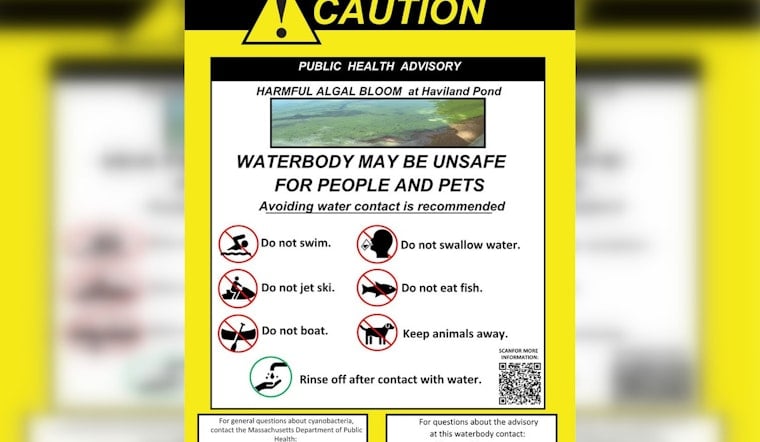
Haviland Pond has suddenly gone from summer hangout to local health concern, as Ludlow officials warned Thursday that the water may be unsafe after signs of a cyanobacteria (blue-green algae) bloom were reported. A public advisory is now posted at the site, telling people to skip the usual pond routine: no swimming, no boating, no swallowing the water, and no letting pets anywhere near it. The town is also recommending that people avoid eating fish from the pond. Municipal crews have put up warning signs at the public access point while health officials coordinate testing and ongoing monitoring.
What the advisory says
According to the Ludlow Police Department, the advisory spells out several clear rules: do not swim or boat in Haviland Pond, do not swallow pond water, keep animals away from the shoreline, and do not eat fish taken from the pond. The notice also provides contact details for the Ludlow Health Department and the Massachusetts Department of Public Health so residents can ask questions or report any suspected illness linked to the pond.
Health risks and state guidance
Cyanobacteria can produce toxins that irritate the skin and cause gastrointestinal problems, and in rare cases can lead to liver or neurological issues if the contaminated water is ingested. Pets and young children are considered especially vulnerable. The Massachusetts Department of Public Health offers statewide guidance on how to recognize and respond to these blooms, while more technical background on monitoring and bloom thresholds is available from the Association to Preserve Cape Cod. Officials note that laboratory sampling and analysis are used to decide when an advisory can safely be lifted.
Local history and next steps
Haviland Pond, also known to the state as Chapin (Haviland) Pond, has dealt with algae issues before, and previous blooms and response efforts have been documented in local coverage. The Reminder has reported on earlier cyanobacteria events and described how Ludlow works with state experts on sampling plans. Advisories are typically removed only after multiple rounds of testing show that toxin levels and cell counts have dropped below established health thresholds.
Residents who have questions or believe they may have been exposed can contact the Ludlow Health Department or call (413) 583-5600. For broader information on cyanobacteria and health guidance across Massachusetts, the Department of Public Health can be reached at 617-624-5757.





