

























































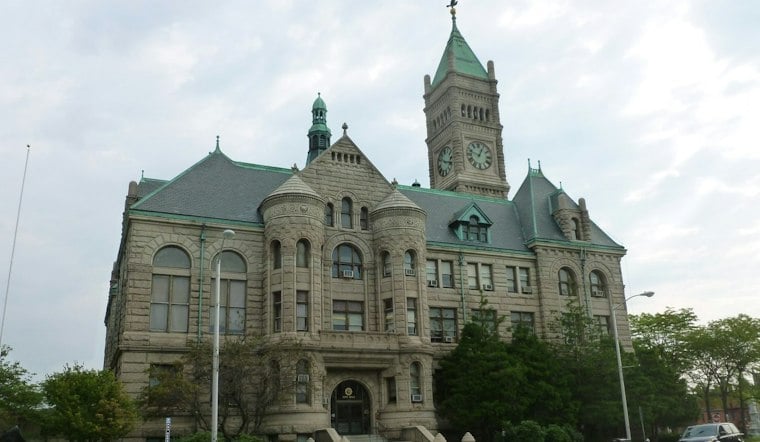
A push to simply study whether Lowell should allow cannabis consumption lounges failed Tuesday, as the City Council voted 7-3 against a motion that would have directed the city manager to produce a report on the idea. The motion, brought by Councilor Corey Robinson, didn't seek approval of an actual lounge — just a look at what one might involve.
According to the Lowell Sun, Robinson's original proposal was amended after Councilor Sokhary Chau suggested he narrow it to a request for a report, rather than a push for an immediate green light. The revised motion asked City Manager Tom Golden to have the proper department look into possible implementation, related businesses, and potential zoning changes. Even in that softened form, the measure couldn't win over a majority of the council.
Robinson, Chau and Councilor John Descoteaux voted in favor of the amended motion. Voting against it were Councilors Belinda Juran, Rita Mercier, Sidney Liang, Sean McDonough, Vesna Nuon, Kim Scott and Mayor Erik Gitschier, resulting in the 7-3 rejection.
Why Some Councilors Pushed Back
Opposition on the council centered on unresolved questions about regulation and neighborhood impact rather than outright rejection of cannabis consumption as a concept. Juran raised concerns about potency regulation and the risk of impaired driving tied to lounges, and argued that the health department, police department and other city agencies should weigh in before Lowell decides whether — and where — to opt in at all.
Liang voiced a different worry: that cannabis lounges could end up concentrated in the Acre neighborhood if the city moved forward without careful planning. Mercier, for her part, opposed building out an implementation plan before any neighborhood had even expressed willingness to host a lounge in the first place.
Robinson countered that cannabis consumption already happens throughout Lowell, pointing to host-community tax collections and state revenue tied to the industry as evidence the city is already deeply involved in the cannabis economy. He argued that consumption lounges could represent an economic development opportunity for the city, which already hosts cannabis cultivation sites, multiple dispensaries and delivery services. The Smyth Cannabis location along Route 38 has been open in Lowell since 2021, per the Lowell Sun's reporting.
The State's New Licensing Framework
The debate in Lowell comes against the backdrop of a statewide regulatory shift. The Massachusetts Cannabis Control Commission voted unanimously, 4-0, to approve three new license types for on-site cannabis consumption: a Supplemental license letting existing marijuana establishments incorporate consumption lounges into their business, a Hospitality license allowing new or non-cannabis businesses to host consumption activity in partnership with a licensed establishment, and an Event Organizer license covering temporary consumption events.
Those regulations officially took effect Jan. 2, the Lowell Sun reported, but state rules require individual municipalities to opt in locally — through a referendum, ordinance or bylaw, according to the Commission — before any lounge can actually open within their borders. As of the Lowell Sun's reporting, no Massachusetts community had completed that opt-in process, meaning the state currently has no cannabis consumption lounges at all.
Haverhill Could Beat Lowell to the Punch
While Lowell hesitates, Haverhill appears to be racing ahead. Voters there approved a local ballot measure allowing cannabis consumption lounges, and the Lowell Sun noted that Haverhill could become one of the first Massachusetts communities to actually allow them. The measure followed what WHAV described as the first-in-the-state local ballot question of its kind, asking voters to approve on-site, commercial cannabis usage.
The push was driven in part by Stem, a Haverhill dispensary that sought to renovate its building at 124 Washington St. to accommodate an on-site consumption lounge. The city certified 3,532 signatures for the ballot petition — clearing the required 3,160 — after owner Caroline Pineau said she had submitted more than 5,200 signatures from registered Haverhill voters. Per The Boston Globe, Pineau had already broken ground on a renovation costing more than $2 million to add the lounge before voters even weighed in.
Even so, the regulatory path remains unfinished statewide. The Globe's report noted that the Commission's own zoning tracker showed no communities had put social-consumption changes into effect, and that the Commission had not yet made license applications for the new categories available at the time of that reporting. Massachusetts voters first legalized recreational cannabis in 2016 and reaffirmed that decision in this month's midterm elections, even as cities like Lowell continue to wrestle with how far to take the next phase of legal consumption.



