

























































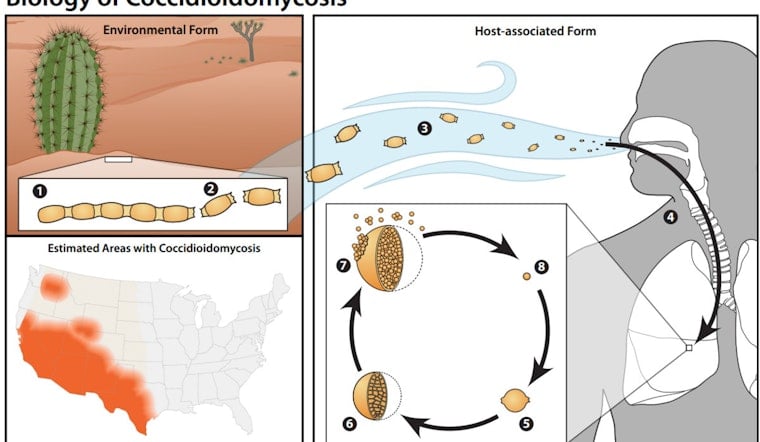
Federal health officials are warning people in the Phoenix metro and across the broader Southwest to be on alert, as dust storms and other wild weather can loft microscopic fungal spores into the air. Inhaling spores of Coccidioides can cause coccidioidomycosis, better known as Valley fever, a respiratory infection that often resembles pneumonia. Most otherwise healthy people recover without treatment, but the disease can be serious for older adults, pregnant people and anyone with a weakened immune system.
CDC: Wind, Floods and Dust Can Release Spores
The Centers for Disease Control and Prevention says weather events such as dust storms, strong winds and flooding can disturb soil where Coccidioides lives and send tiny spores into the air, increasing the chance of infection, according to the Centers for Disease Control and Prevention. The agency also notes that cycles of heavy rain followed by hot, dry conditions appear to help the fungus grow in soil before it is dispersed into the air. The infection is not spread from person to person, the CDC adds.
Cases Rising and Diagnosis Delays
A recent review in The Journal for Nurse Practitioners reports that reported Valley fever cases have climbed roughly tenfold since 1998 and warns that diagnostic delays are common. That review found about 80% of patients received unnecessary antibiotics before the correct diagnosis was made, a pattern that can prolong illness and drive up health care use.
Estimated National Burden
Broader surveillance modeling suggests the true number of symptomatic infections is far higher than reported. A 2025 analysis in JAMA Network Open estimated that hundreds of thousands of symptomatic cases occur annually and that tens of thousands require hospitalization. Public‑health experts say underdiagnosis and variable reporting practices mean local spikes often surface only after severe weather or targeted testing efforts.
Pets and Veterinary Care
The same fungus can infect dogs that dig or otherwise inhale contaminated dust. Veterinary guidance notes that treatment usually requires months of antifungal medication, often six to 12 months for uncomplicated canine infections, according to VCA Animal Hospitals. Pet owners are urged to tell their veterinarian about recent dust exposure if a dog develops cough, lameness or unexplained lethargy.
How to Protect Yourself and Your Family
Public‑health guidance for people in endemic and emerging areas includes staying indoors during dusty conditions, using high‑efficiency air filtration, avoiding digging or disturbing bare soil and seeking medical attention if respiratory symptoms last more than a week, per the Centers for Disease Control and Prevention. When outdoor work or unavoidable dust exposure is likely, experts recommend using NIOSH‑approved respirators and reducing time outdoors during storms.
Local Picture, Historical Context
Hoodline coverage and local reporting have documented how heat, drought and intense dust events coincide with rises in cases, for example in our earlier piece on El Paso's uptick, Valley Fever Explodes in El Paso. Past outbreaks after major dust storms show the risk can extend beyond traditional hotspots when strong winds carry contaminated dust hundreds of miles.



