

























































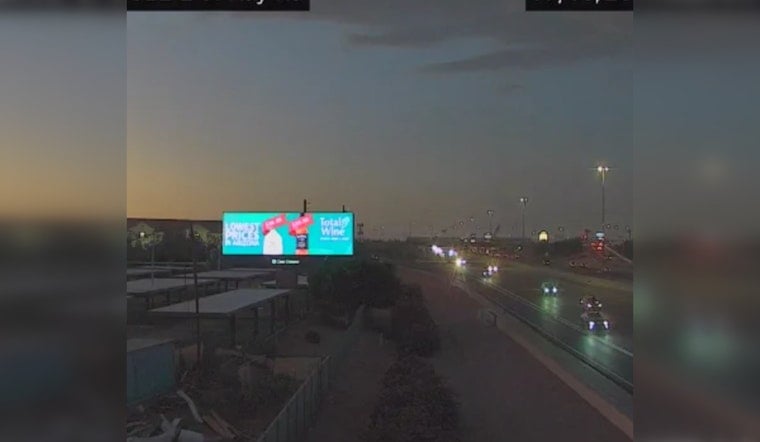
The Arizona Department of Transportation on Thursday warned that blowing dust is sweeping across eastbound Interstate 10 in the East Valley, cutting visibility to almost nothing in spots and rattling the evening commute. The agency is again telling drivers: do not drive into a dust storm, and if you cannot safely get off the freeway, use the state’s Pull Aside, Stay Alive guidance. East Valley motorists should be ready for sudden, short-lived whiteouts as monsoon outflows push through.
Dust is also moving across I-10 in the East Valley. Remember: NEVER drive into a dust storm. If you encounter one and can’t exit the highway, follow the Pull Aside, Stay Alive tips. https://t.co/mBw0gE7GoP https://t.co/EXKYYILCr8
— Arizona DOT (@ArizonaDOT) July 9, 2026
Where The Dust Is Rolling In
Arizona DOT’s live traffic sensors picked up dust along eastbound I-10 near milepost 163.44, east of Wild Horse Pass, and near milepost 160.1, east of Ray Road. The agency also reported blowing dust on the Loop 101 (Price) corridor roughly between Loop 202 and Guadalupe Road, according to Arizona DOT. Those drifting pockets can knock visibility down to near zero in seconds and have already triggered rapid-fire travel alerts around the Valley. Drivers on those stretches are urged to slow down and, when they can do so safely, exit the freeway until conditions clear.
Pull Aside, Stay Alive: What To Do When The Wall Hits
The Pull Aside, Stay Alive campaign, managed by ADOT, lays out a straightforward checklist for drivers who cannot safely leave the freeway, per Pull Aside, Stay Alive. Pull completely off the paved portion of the road after checking surrounding traffic, turn off all vehicle lights including hazard flashers, set the emergency brake, and stay buckled in until the storm moves on. Officials stress that motorists should not stop in a travel lane or on the paved shoulder, and they urge high-profile vehicles to start slowing earlier than passenger cars. The whole point is to avoid chain-reaction crashes when visibility collapses and drivers instinctively lock onto the glow of taillights, sometimes straight off the roadway.
Why The East Valley Gets Smacked So Fast
Thunderstorm outflows and microbursts that are common during Arizona’s monsoon season can scoop up loose desert soil and build it into fast-moving walls of dust, or haboobs, that sweep across the Valley and drop visibility to near zero in a matter of minutes, according to the National Weather Service's Phoenix office. Those quick wind shifts, paired with sunbaked, dry ground, are why agencies keep hammering the same message: do not try to punch through the dust, and pull aside only if you cannot safely get off the road.
How To Check Conditions Before You Hit The Freeway
Before heading out, drivers can scan live camera feeds and road conditions on AZ 511. ADOT’s message boards and alerts can flag stretches where visibility has already tanked. If you are already on the road and notice visibility starting to slide, slow down, exit safely if you can, or follow the Pull Aside checklist until the dust passes. Keeping a charged phone and extra water in the car is also a smart move during monsoon-season travel surprises.
Local Context: Another Dust Shot Across The Bow
The Valley has already dealt with similar snap dust events this month; a fast-moving dust wall along Loop 202 drew the same Pull Aside warnings and showed just how quickly conditions can flip from clear to blinding. For real-time closures or slow traffic on I-10, drivers can check AZ 511 before they get on the road.




