

























































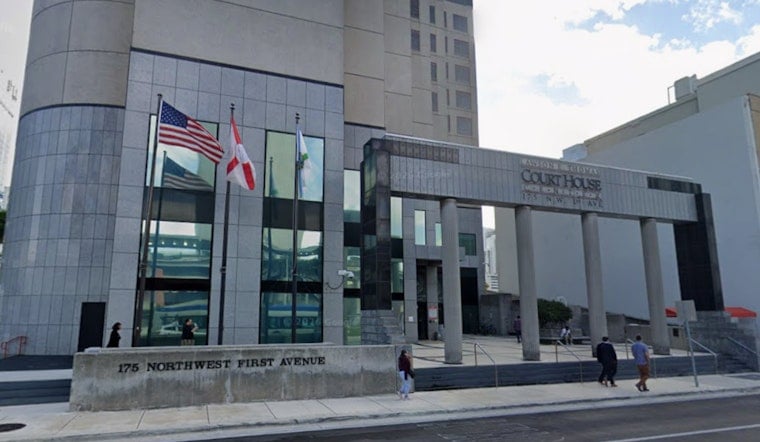
A federal appeals court has dealt Florida’s higher-ed agenda a serious blow, rejecting the state’s latest attempt to upend the federal college-accreditation system. On Monday, the Eleventh Circuit affirmed a lower court’s dismissal of Florida’s 2023 lawsuit, ruling that private accreditors do not wield federal legislative or executive power and cannot be treated as government actors the way Florida claimed. The decision lands as the newest setback in a years-long accreditation and campus-policy fight driven by leaders aligned with the DeSantis administration.
What the appeals court said
Writing for a unanimous three-judge panel, U.S. Circuit Judge Andrew L. Brasher did not mince words about the basic framework of federal student aid. “There is really no debate that the accreditation requirement is reasonable,” he wrote, pushing back on Florida’s effort to recast accrediting bodies as federal actors.
The panel emphasized that accreditors get their authority from voluntary membership and their own bylaws, not from Congress or the White House, and that the Department of Education is the one that ultimately decides which institutions qualify for Title IV funds. Courthouse News Service detailed the opinion and its reasoning, which largely shuts the door on Florida’s core theory of the case.
The state's case and earlier rulings
Florida launched the lawsuit in 2023, attacking the Higher Education Act’s reliance on private accreditation from several angles. The state argued that the system violated the private nondelegation doctrine, the Spending Clause and the Appointments Clause, and that the conditions tied to Title IV aid failed to give institutions and states fair notice, as reported by The Washington Post.
A federal judge in the Southern District of Florida dismissed those claims in 2024. On Monday, the Eleventh Circuit agreed, concluding that the state’s constitutional theories clash with both precedent and the basic structure of federal aid, according to Inside Higher Ed. The appeals court framed the dispute as a fight over policy choices and program administration rather than a sign that the accreditation framework is constitutionally defective.
State laws that set up the fight
This courtroom clash did not come out of nowhere. It grew out of an aggressive series of Florida laws reshaping higher-education policy.
SB 7044, passed in 2022, requires public colleges and universities to seek a new accreditor at the end of each review cycle, a move lawmakers said would inject competition into the process, according to the Florida Senate. The following year, the Legislature approved SB 266, a sweeping measure that restricts DEI spending and related policies, which observers say cranked up tensions with regional accreditors, as analyzed by Faegre Drinker.
Together, these laws supplied the political and regulatory backdrop for Florida’s legal attack on how accreditation works nationwide.
DeSantis' alternative accreditor
Florida has not limited its ambitions to court filings. As a parallel policy move, state officials announced the Commission for Public Higher Education in June 2025 as an alternative accreditor meant to give public systems a different path, according to the governor’s office. The Commission, backed by several public university systems, aims to seek federal recognition so it can accredit institutions and influence Title IV eligibility, as described by Inside Higher Ed.
Even with strong political support at home, though, any new accreditor still has to clear the same Department of Education recognition process before it can play any role in determining access to federal student aid.
Legal implications
The Eleventh Circuit rejected the core constitutional theories Florida put forward, concluding that accreditors’ longstanding private role and voluntary structure do not fit the “federal-actor” label that the state was pressing for. That conclusion was widely noted in legal coverage. Bloomberg Law highlighted that any sweeping overhaul of accreditation will have to come from the Education Department or Congress, not from courts rewriting decades of practice in a single case.
For now, Florida’s public colleges and universities remain accredited and eligible for federal student aid, and the fight shifts back to the arenas of administrative rulemaking and politics, according to the court record and legal reporting. Local coverage and reaction to the ruling are available from Creative Loafing Tampa, and the district-court judgment along with related filings can be found at legal repositories such as CaseMine.





