

























































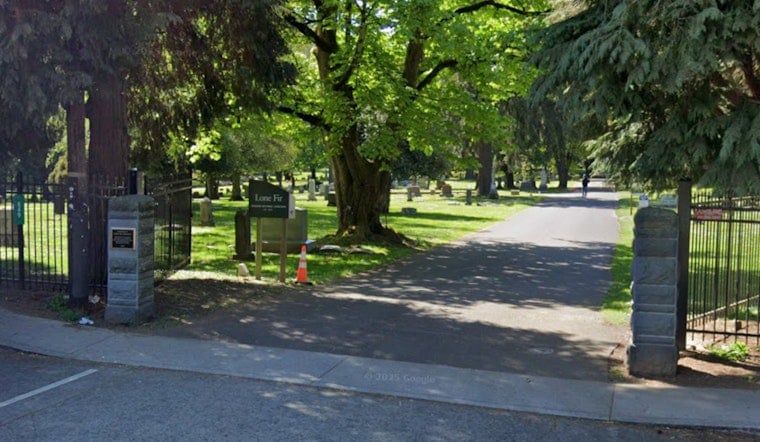
A once-overlooked corner of Lone Fir Cemetery is fast becoming one of the most talked-about patches of ground in Portland. At the cemetery’s southwest edge, a new Chinese memorial is taking shape, mixing public art, name panels and a traditional altar to honor people whose graves were buried, dislocated or literally paved over decades ago. The project aims to give Chinese Portlanders a restored sense of place while asking the wider community to confront how public institutions helped erase those lives in the first place.
As reported by OregonLive, Portland artists Qi You and Sophia Austrins have been leading hands-on workshops that produced dozens of clay offerings. More than 90 of those hand-formed pieces will be cast or otherwise preserved and built directly into the memorial’s altar and surrounding landscape. The art element is part of a larger cultural-heritage garden that is expected to be finished in 2027.
County apology and funding
Last year, the Multnomah County Board of Commissioners took the unusual step of issuing a formal apology for the county’s role in clearing Lone Fir’s Block 14 and voted unanimously to back that apology with $1 million for the new memorial, according to Multnomah County. Coverage at the time highlighted not just the vote but the years of community organizing that led up to it, with the community push for redress underscoring how long advocates had been asking officials to make things right.
What researchers found
Metro’s historical research now estimates that more than 3,100 people of Chinese ancestry were buried at Lone Fir between the 1880s and the early 1920s, most of them in Block 14, according to Metro. The agency also reports that construction on the memorial began in March 2026 and will include a pavilion, etched stone walls that lay out the site’s history, a circular offering area and a new altar designed to support traditional rites.
How the story came to light
The current push for a memorial traces back to a discovery in 2004. While going through the basement of the Oregon Chinese Consolidated Benevolent Association, Rebecca Liu uncovered ledger books documenting many Chinese burials at Lone Fir, records that were missing from official files. That find, detailed by the Lone Fir Cemetery Foundation, spurred community groups to demand a closer look at what was left on the ground. After the county removed its maintenance building from the Block 14 site in 2005, archaeologists found human remains and cultural artifacts, confirming that part of the old burial ground still lay intact under the pavement.
Art as repair
For the artists and elders involved, the public-art program is not decoration so much as a method of repair. “We wanted to take this opportunity to heal and bring out people’s voices,” Qi You told OregonLive. Co-lead artist Sophia Austrins has described the project as part of a justice practice, arguing that the memorial has to both expose past harms and open up concrete ways to address the deeper issues that allowed those harms in the first place.
Looking ahead
Organizers say the memorial is meant to mark a beginning, not an endpoint. Metro plans to install vertical name panels pulled from the CCBA ledger records, along with interpretive text and spaces for offerings that acknowledge long-standing cultural practices at the site, per Metro. A formal dedication is expected next year when construction wraps up. For many Portlanders watching this unfold, the memorial’s real power lies in a simple idea: returning names, ritual and visibility to people who were all but erased from the city’s official story.



