

























































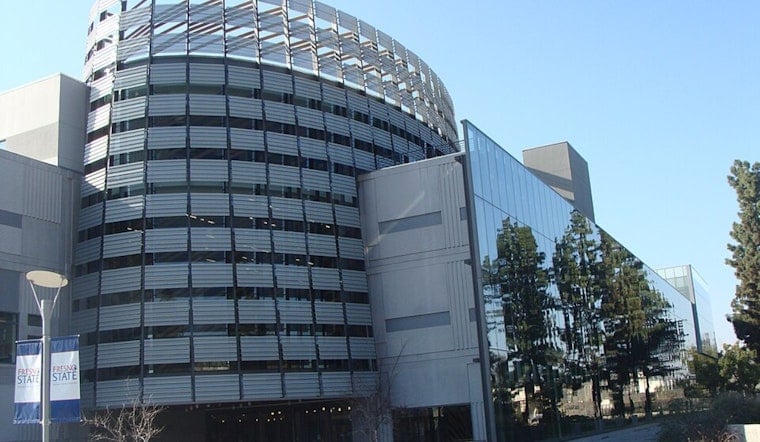
Central Valley farmers just got a serious tech upgrade. Last Thursday, Fresno State hosted the public launch of the F3i Supercomputing Center at the Fresno State Library, unveiling a shared GPU and AI-powered computing hub built to help growers, startups and students tackle farm problems in a fraction of the time. The partnership links F3 Innovate with California State University, Fresno and the San Diego Supercomputer Center at UC San Diego, aiming to put advanced computing and data expertise directly inside the valley's food economy. Organizers say the goal is to let growers crunch years of weather, irrigation and satellite data in minutes instead of months, speeding decisions that shape yields and profits.
Partnership and launch
Priscilla Koepke, chief executive officer of F3 Innovate, framed the effort as basic infrastructure, saying that data and computing power are becoming foundational infrastructure, according to Fresno State Today. Under the arrangement, Fresno State will host the physical compute environment, while UC San Diego's San Diego Supercomputer Center will handle the cyberinfrastructure and AI systems architecture. The campus launch featured live demonstrations along with remarks from industry, education and government leaders who argued the region needs high-end computing as much as it needs canals and roads.
What the center will do
The F3i Supercomputing Center is set up to deliver three integrated services: affordable high-performance computing for startups and growers, applied AI services to help build and deploy models, and workforce and talent development through educational programs, as outlined by F3 Innovate. F3i materials say the center will prioritize Central Valley users and host data challenges that turn real farm headaches into team-based AI sprints. By pooling capacity, organizers hope smaller operators can tap GPU clusters and large datasets that would normally come with a six-figure price tag.
Real-world testing: frost and orchards
Partners have already been test-driving the idea. F3i and UC San Diego's Societal Computing and Innovation Lab ran student frost-risk data challenges that leaned on SDSC compute resources to generate field-level frost warnings, showcasing the kind of tools the new center aims to support, according to SDSC. Student teams trained models on local microclimate data using high-performance systems and produced farm-scale forecasts that SDSC said were more actionable than legacy weather products. For small growers, those extra hours of warning can spell the difference between a viable harvest and a complete loss.
Launch demos, local leaders on stage
During the Fresno State Library launch, organizers showed how the system can fuse years of weather records, irrigation schedules, harvest logs and satellite imagery into quick, practical analyses, KMPH reported. Speakers included Koepke, Fresno State President Saúl Jiménez Sandoval, former Fresno mayor Ashley Swearengin and U.S. Rep. Jim Costa, among others. During a live demo, F3i's Ryan Dinubilo told the crowd, "The system begins identifying patterns we've probably never noticed on our own." The pitch was clear enough: put computing power and tech talent where the food is grown.
What comes next for growers and students
Organizers say the center will open slots for researchers, startups and educators, and will run recurring Data Challenges along with training cohorts such as the AI Launchpad with Microsoft to build local capacity, per F3 Innovate. Officials predict that the shared model will cut costs, speed the jump from pilot projects to field deployments and create pathways for student work to become commercial tools Central Valley producers can actually use. For valley farms that often operate on thin margins while facing extreme weather, the new hub is designed to function as a practical, local piece of digital infrastructure rather than a distant, high-tech luxury.




