

























































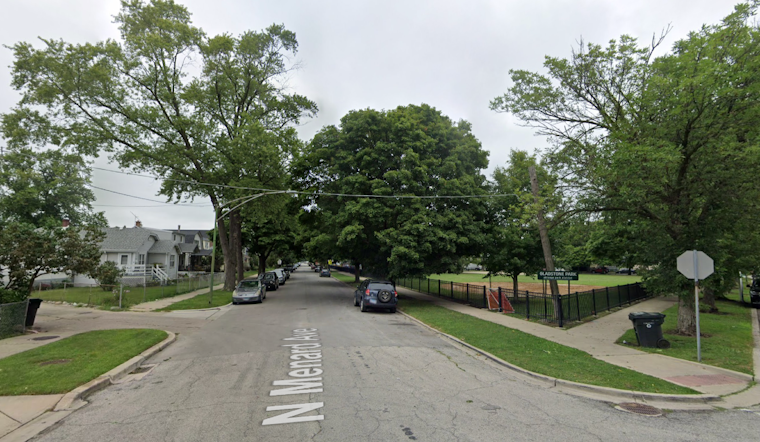
A routine wellbeing check at a Gladstone Park home turned tragic this week when a 7-year-old girl, later identified by the Cook County medical examiner as Leen Awad, was pulled unresponsive from a backyard swimming pool. Chicago police were called to the 5400-block of North Menard Avenue around 1:30 p.m. on Tuesday, where a witness had taken the child out of the water.
Officers and first responders rushed her to Lutheran General Hospital in serious condition. According to the medical examiner, she was pronounced dead on Thursday. Authorities have classified her death as an accidental drowning.
What Officials Are Saying
Chicago police say officers responding to the wellbeing check found the child unresponsive in the home’s pool, and that a witness had already pulled her from the water by the time they arrived.
According to ABC7 Chicago, Leen was transported to Lutheran General Hospital, where the Cook County Medical Examiner later pronounced her dead. Investigators are treating the case as an accident, a classification that aligns with the medical examiner’s ruling of accidental drowning.
City Pools And Local Swim Programs
The incident comes as many families lean on backyard pools once the weather warms up, even though the city maintains a broad network of public options. The Chicago Park District operates dozens of outdoor and indoor pools and runs learn-to-swim classes, parent-and-child sessions and lifeguarded open-swim hours.
According to the Chicago Park District, many locations offer free or low-cost swim lessons for children, along with seasonal open-swim schedules across the city. City-run lessons and lifeguarded pools are often held up by safety advocates as a safer option than unsupervised backyard swimming, especially for young or inexperienced swimmers.
Drowning Risks And Safety Measures
National health officials have long warned that drowning is one of the leading causes of unintentional injury death for children, and that most child drownings happen in home pools. According to the Centers for Disease Control and Prevention, effective prevention usually requires layers of protection, including close and active adult supervision, four-sided fencing that fully encloses pools, swimming lessons and adult CPR training.
The American Academy of Pediatrics echoes many of those recommendations and places particular emphasis on hands-on supervision. The group urges caregivers to keep young children within arm’s reach any time they are in or near water and recommends that adults responsible for watching kids learn basic lifesaving skills, per the American Academy of Pediatrics.




