

























































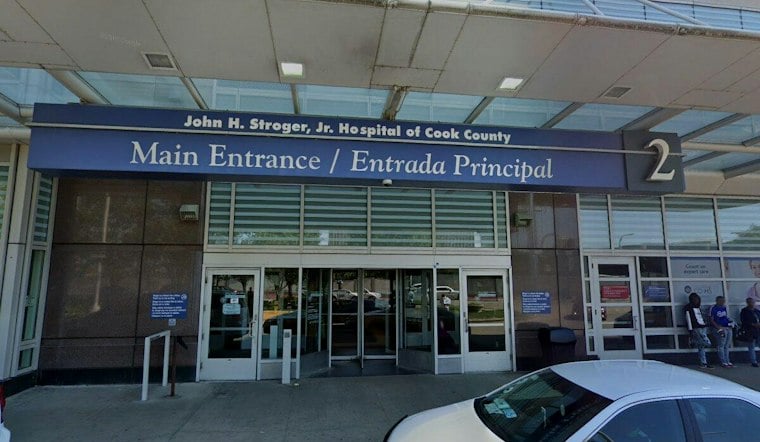
A federal appeals court has sided with Cook County in the case of a pharmacy technician who was fired from John H. Stroger Jr. Hospital in Chicago after she declined COVID-19 vaccination and was denied a religious exemption. The U.S. Court of Appeals for the Seventh Circuit affirmed the judgment against Jetaime Flores on November 6, upholding a December 2025 ruling by a federal judge in Chicago that had already gone against her.
Flores worked as a pharmacy technician in the pharmacy at Stroger Hospital, which is operated by Cook County, according to Medical Daily. The hospital required on-site workers to be vaccinated against COVID-19 while exempting employees who worked from home, the outlet reports. When Flores requested a religious exemption, Cook County denied it; she declined vaccination anyway and was fired, after which she sued under Title VII of the Civil Rights Act, the federal law that, per a U.S. Supreme Court decision, requires employers to accommodate religious practices unless doing so would cause undue hardship.
The GovInfo court record lists the case as Jetaime Flores v. Cook County, docketed as Seventh Circuit case number 26-1088 and dated November 6, 2026, per the Administrative Office of the U.S. Courts. A Law360 search-result snippet describing the same dispute says the Seventh Circuit refused to reopen a suit alleging that an Illinois county hospital fired a pharmacy technician for requesting a religious exemption from the COVID-19 vaccine.
A Precedent Set Weeks Earlier
The outcome in Flores's case was shaped by a Seventh Circuit ruling issued just over a month earlier in a closely related dispute involving another Cook County health worker. Per the seed reporting, Flores v. Cook County was controlled by the court's earlier ruling in Mason, and the Flores decision itself is nonprecedential, meaning it does not set new binding law beyond applying that earlier holding.
That earlier case involved Brooke Mason, who had worked as a Stroger pharmacist since 2010 before Cook County fired her in May 2022 after denying her religious exemption request. The county had given Mason 90 days to find a remote job within its system, but none was available, the seed facts state. On September 28, a split Seventh Circuit panel affirmed summary judgment for Cook County in Mason's suit, with the majority holding the county proved a religious exemption would have posed an undue hardship, while one dissenting judge said the case should have gone to a jury, according to Law360.
The Mason majority found that Cook County's evidence showed it could not safely accommodate in-person staff, and the majority cited similar rulings from the Fourth, Sixth and Ninth Circuits in reaching its conclusion. That ruling is binding in Illinois, Indiana and Wisconsin, giving employers across those three states a precedential citation to argue undue hardship in similar cases, the seed facts note.
A Dissenting Judge's Objection, Then a Reluctant Concurrence
Judge Rebecca Taibleson dissented in Mason, arguing the case should have gone to a jury and criticizing Cook County's evidence as largely conclusory. Weeks later, in Flores's case, Taibleson concurred in the judgment against Flores anyway, explaining that the Mason precedent required the outcome even though she disagreed with that earlier ruling, the seed facts indicate.
In Flores's appeal, her lawyer argued that a pharmacy technician was differently situated from a pharmacist, presumably hoping the distinction in job duties would separate her case from Mason's. The Seventh Circuit rejected that argument, finding that most pharmacy workers, including technicians, sometimes deal directly with patients and hospital staff, and that pharmacy workers collaborate with one another in ways that can spread disease among themselves, per the seed reporting relayed by Medical Daily.
Broader Pattern of COVID Vaccine Exemption Suits
The Flores and Mason rulings arrive amid a string of related disputes moving through the Seventh Circuit and beyond. The seed facts note that Cook County health employees requested religious exemptions in numbers significant enough to factor into the Mason ruling's analysis, and that the same appeals court in 2024 revived separate lawsuits by a nurse and a pharmacy technician against Wisconsin-based Aspirus, where the dispute concerned whether secular elements within exemption requests canceled out their religious nature.
The Supreme Court's 2023 decision in Groff v. DeJoy set the governing standard those cases must apply: Title VII requires employers to accommodate employees' religious practices unless doing so would impose an “undue hardship on the conduct of the employer's business,” according to the U.S. Supreme Court's opinion. More recently, on October 5, the Supreme Court declined to hear a petition from Washington state firefighters in a separate COVID vaccine accommodation case, leaving lower-court rulings on the issue in place, the seed facts state.
The seed facts indicate the Seventh Circuit's vaccine exemption rulings affect pending cases across Illinois, Indiana and Wisconsin, and note that Flores may still seek rehearing by the full Seventh Circuit or ask the Supreme Court to take up her case, though it remains unconfirmed whether either step has actually been filed. The ruling does not require any worker to be vaccinated now, and current vaccine recommendations are unchanged by the decision, according to the seed reporting.





