

























































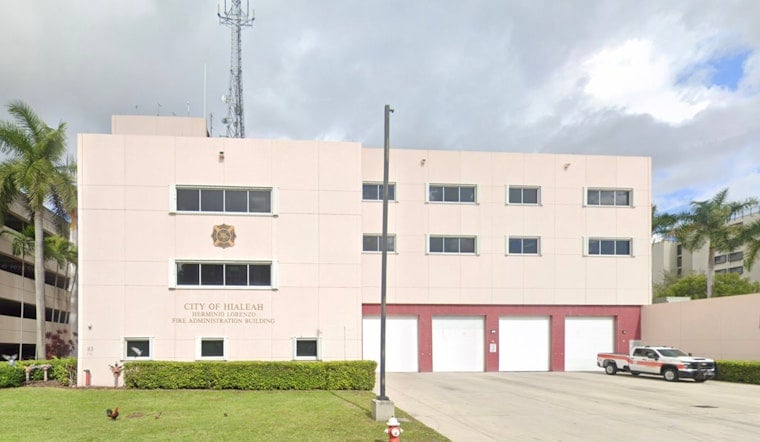
At least 65 firefighters have left Hialeah’s fire department over the past three years, and at least 14 more are preparing to go, putting fresh pressure on a system already running below recommended staffing levels. The exodus is being driven by pay, pensions and limited promotion prospects, but the local consequences are anything but abstract: more than 31,000 emergency calls a year, most of them medical.
An investigation by Miami Herald found that the department now employs 226 firefighters, after 34 retirements and dozens of other departures. Hialeah has hired 149 firefighters over the last eight years, yet its workforce remains roughly 74 firefighters smaller than it was two decades ago, while the union says 22 budgeted positions are vacant.
Hialeah’s Pay Gap Is Hard To Ignore
Hialeah’s current agreement with its firefighters includes a 6% cost-of-living increase that took effect after October 1, 2025, along with additional longevity raises after 10, 15 and 20 years. The City of Hialeah’s IAFF agreement shows the structure of those raises, but neighboring agencies continue to advertise stronger compensation packages.
Miami-Dade County’s recruitment page lists firefighter compensation from $75,177 to $111,873.75, with paramedic-protocol employees eligible for up to $116,178.40. That kind of gap helps explain why Hialeah firefighters say the department is no longer competitive, even as the city relies on overtime to keep stations covered.
Three-Person Crews Face A Four-Person Standard
Hialeah’s suppression units are staffed with three-person crews instead of four, a difference that matters when firefighters are trying to manage a structure fire, rescue occupants and maintain a safe backup team. The International Association of Fire Fighters says NFPA 1710 recommends at least four firefighters for a typical low-hazard residential fire, while the National Fire Protection Association describes four-person staffing as the minimum benchmark for career engine companies.
The workload is also heavily tilted toward emergency medical response, with nearly 90% of Hialeah calls reportedly involving medical emergencies. The Miami Herald reported that at least 30 firefighters cannot perform advanced life-support procedures, while the department has increasingly relied on hiring emergency medical technicians instead of paramedics.
Contract Talks Could Shape The Department’s Future
Mayor Bryan Calvo has said he is concerned about firefighter overtime and is considering subsidized housing for first responders on city-owned land. Union leaders have also floated a merger with Miami-Dade Fire Rescue as a long-term fix for pay and benefits, but Calvo has ruled out exploring that option for now.
The timing is pointed: the city has scheduled contract negotiations with the International Association of Fire Fighters for Thursday. A city notice lists the session as the next formal step, with staffing, compensation and retention likely to dominate the conversation.
Hialeah’s numbers suggest this is no longer just a recruiting problem. The city can keep hiring, but if experienced firefighters continue walking out faster than the department can retain them, residents may keep seeing the same cycle: vacancies, overtime, thinner crews and an increasingly expensive attempt to hold the line.





