

























































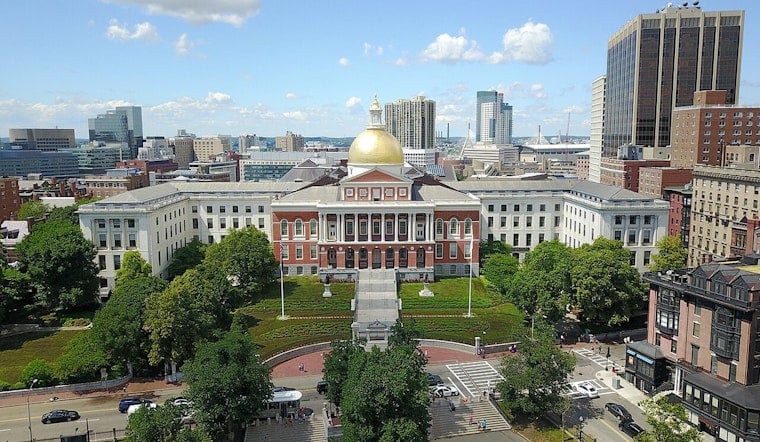
Beacon Hill cracked open the door to a new kind of church conversion on July 8, 2026, when the Massachusetts House of Representatives passed a $561 million economic development and competitiveness bond bill that folds in the "Yes In God's Backyard" (YIGBY) framework. The measure would allow multifamily housing as-of-right on qualifying religious-institution land, and now heads to the Senate, setting up a statewide test of whether faith-owned parcels can really help ease the housing shortage.
How YIGBY would work
The package clears a path for houses of worship and other faith groups to build multifamily housing by right on qualifying parcels up to four acres, while excluding land zoned for or used as schools. Projects of 30 or more units would be required to set aside at least 20 percent of units as affordable, and developments would generally pay local property taxes unless a municipality grants an exemption, according to the Massachusetts House of Representatives. Lawmakers framed the changes as part of a broader economic package meant to spur conversions and downtown revitalization.
Backers and the local pitch
Advocates say YIGBY will help congregations turn underused land into homes while generating new revenue for towns and new income streams for faith groups. As outlined by CHAPA, the legislative push is tied to bills H.2347 and S.1430 and has been sponsored by Rep. Andy Vargas and Sen. Brendan Crighton.
How much land - and housing - is on the table
A Center for Geospatial Solutions analysis for the Lincoln Institute of Land Policy identified roughly 5,000 potentially developable faith-owned parcels across Massachusetts totaling about 20,000 acres, a footprint the institute says could support at least 60,000 homes. That finding underpins YIGBY backers' argument that faith-land is an untapped source of near-urban housing capacity, and advocates point to even larger estimates when broader assumptions are applied.
Examples from Lynn and beyond
Supporters point to faith-led projects already converting church space into apartments as evidence that the model can work at the neighborhood level. Reporting in the Boston Business Journal described a downtown Lynn congregation that has turned its upper floors into more than two dozen apartments.
Critics and legal questions
Opponents caution that a statewide preemption could weaken local zoning and be exploited by developers to skirt planning safeguards. Policy critics have warned about "loopholes" and the risk of luxury projects displacing neighbors, per the Pacific Research Institute, and planning outlets have pointed to recent pushback in Colorado as a cautionary tale for legislators in Boston's State House.
What happens next
Having passed the House, the bill, approved there on a 148-2 vote, now moves to the Senate, where it could be amended or stalled before any final action. Senators could alter YIGBY's size limits, affordability thresholds or tax language before any measure reaches the governor's desk, according to the Massachusetts House of Representatives.
If the Senate and governor sign off, YIGBY would add a new tool to Massachusetts' housing toolbox while re-igniting debates over infrastructure, local zoning authority and who benefits when sacred spaces are redeployed for housing. For congregations, municipal officials and neighbors, the policy fight would shift from principle to the practical details of how housing gets built and who pays for it.





