

























































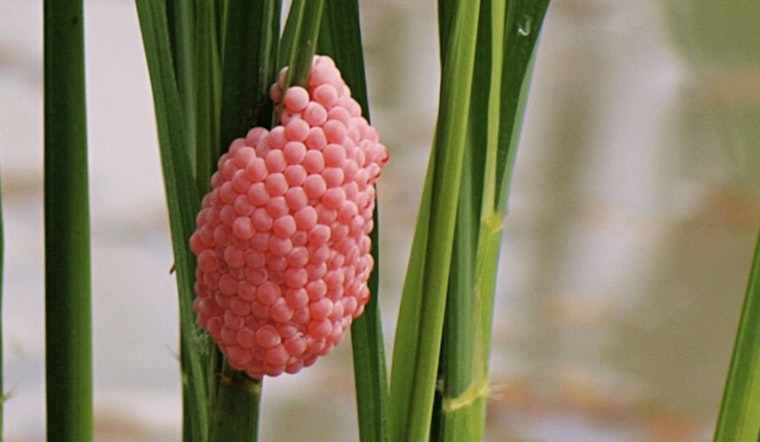
On the San Antonio River Walk, the latest battle is not over tourism or traffic. It is over snails. The San Antonio River Authority has rolled out two new pilot programs this year to slow a growing invasion of apple snails along the downtown stretch of the river, pairing science with some old-fashioned elbow grease on the water.
Staff and trained volunteers are now heading out in kayaks to scrape the snails’ bright-pink egg clusters off the concrete channel walls. At the same time, biologists are testing two types of barriers under and along the channel to keep the snails from climbing out to lay those eggs in the first place. The new tactics come after years of manual removal and rising concern that these fast-breeding invaders can strip aquatic plants and disrupt habitat along the River Walk.
Over the past seven years, River Authority crews and volunteers have pulled nearly 43,000 adult apple snails and more than 118,000 egg clusters from the upper San Antonio River. "They can lay anywhere from 500 to 2,000 eggs every 10 to 14 days," Adrian Arroyos, an aquatic biologist with the River Authority, said, highlighting why the agency is looking for every possible edge in this fight. Officials believe the infestation may have started when someone dumped aquarium snails into the river, leaving them with few natural predators, according to KSAT.
Barrier Tests And Where They Are Installed
To slow the reproduction cycle, the River Authority has installed two styles of exclusion barriers, angled plastic sheets and bird-deterrent spike strips, in two downtown stretches. The test areas include spots near the Shops at Rivercenter and a Museum Reach section by Josephine Street. This pilot phase expands earlier experiments to roughly 800 feet of coverage so crews can compare which approach works better at stopping snails from crawling out of the water and depositing those bright-pink egg clutches, as reported by the San Antonio Express-News.
Kayak Crews And Why Timing Is Everything
The other major piece of the pilot is more hands-on. Trained River Authority staff and River Warriors volunteers head out in kayaks to scrape off egg clusters and collect adult snails from the channel walls. To stay ahead of the snails’ roughly 10-to-14-day hatching cycle, the agency shifted its monitoring and removal schedule this year from every 14 days to every 10 days. Volunteers receive training before they join these removal trips so they do not accidentally move snails or eggs to other waterbodies.
Cost, Data And Public Health Concerns
For now, the price tag is modest. River Authority staff estimate the barrier materials will cost about 2,500 dollars a year, and officials plan to collect and review data from the pilot later this year before deciding whether to expand installations, according to KSAT. Beyond the cosmetic and nuisance factor, the snails are voracious plant eaters that can wipe out aquatic vegetation and reduce nursery habitat for native fish. They can also serve as intermediate hosts for the rat lungworm parasite, which raises human health concerns if infected snails are eaten raw, according to Texas Invasives.
How Residents Can Help
The River Authority is urging residents not to dump aquariums or unwanted aquatic pets into creeks, rivers, or storm drains. To make responsible disposal easier, the agency has partnered with local pet shops, including Papa Jim's Tropical Fish, Texas Tropical and Marine, and Elegant Reef Tropical Fish Studio, which accept unwanted tanks and animals. The River Authority also invites people to sign up for River Warriors removal trainings and to report sightings through its Apple Snail dashboard, according to the San Antonio River Authority.





