

























































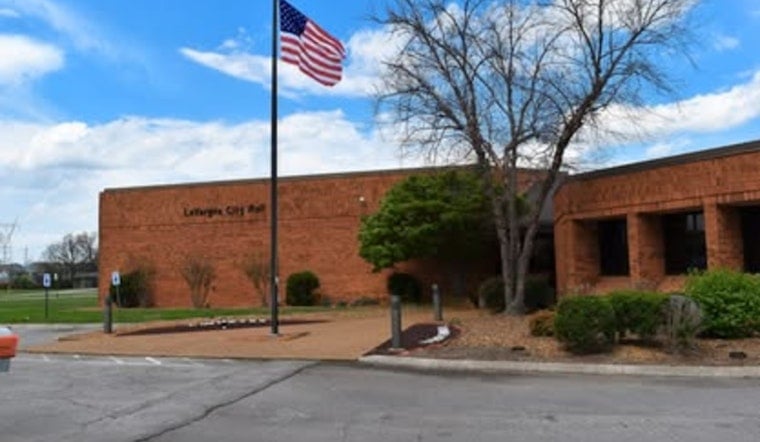
La Vergne is getting ready to put serious limits on where data centers can call home. A proposed zoning amendment would yank that use out of most districts where it is currently allowed and corral new data centers into a much smaller set of locations. The measure is set for discussion at a city meeting on Tuesday, July 14, 2026, at 5:30 p.m.
According to WSMV, data centers are currently permitted in four zoning districts, but the draft amendment would cut that back to just La Vergne’s designated Interchange Districts. The station reports that the change would knock many potential sites out of contention, especially parcels next to single-family neighborhoods and mixed-use residential areas. City staff has circulated materials and a map showing how the allowable areas would be redrawn.
Per the zoning map from the City of La Vergne included in the packet, the remaining spots where data centers would be permitted cluster around highway interchanges, while much of the city would be off-limits under the new rules. The visual makes it clear that land near Murfreesboro Road and many interior commercial corridors would no longer be in the running for data center use.
What the amendment would change
The draft amendment would also bar data centers from operating within 1,000 feet of residential zoning or residential-use areas, churches, daycares, libraries, child-education facilities, public parks, alcohol-serving businesses and other data centers, WSMV reports. That distance would be measured from property line to property line, a detail that could push edge parcels, and some sites that straddle city limits, outside the allowable zone. Developers say separation distances like that are unusual for industrial uses and would likely send more projects into rezoning requests or appeals.
Why neighbors and developers are watching
Across Middle Tennessee, elected officials and residents are trying to figure out how to handle a rapidly expanding data center industry that brings hefty tax revenue along with touchy local impacts such as heavy power and water demand. Local coverage has tracked a run of debates, moratoria and close votes in nearby communities, framing La Vergne’s proposal as part of a larger regional rethink. WGNS recently noted that broader trend. Industry advocates, for their part, argue that interchange-adjacent sites are chosen for access to power and fiber, and that mitigation steps can dial down off-site impacts.
Legal implications
The city’s zoning packet already explains how separation distances are supposed to be calculated: “When separation requirements are established, the distance specified shall be measured as a straight line on a map, not street distance,” the document states. The City of La Vergne shows that applying that rule to data centers would give officials a clear way to enforce the buffers but could also sideline parcels that sit just across municipal boundaries.
The Planning Commission workshop will take up the amendment on Tuesday, and if commissioners decide to advance it, the proposal would likely head next to the Board of Mayor and Aldermen for public hearings and a final vote. If approved, the changes would shrink the number of ready-to-build data center parcels inside La Vergne and push some developers toward rezoning efforts or to sites outside the city limits.





