

























































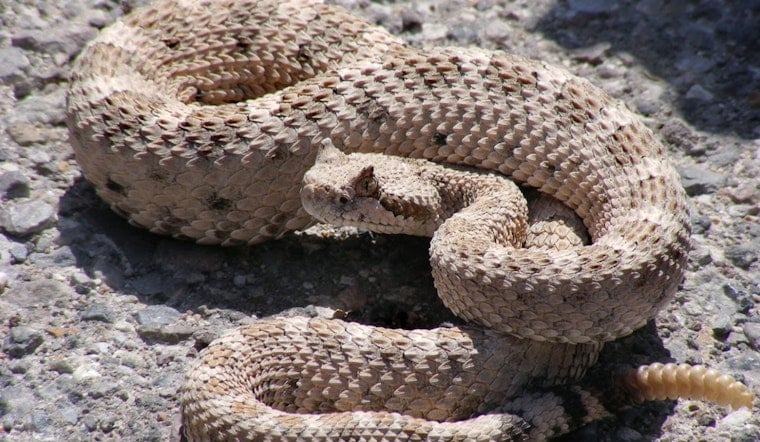
What was supposed to be a laid-back family visit near Lake Oroville turned into a rattlesnake horror story for an Idaho man this spring, ending only after he received a staggering 54 vials of antivenom and an airlift to a Bay Area hospital when local stock ran dry. Doctors treated him for a dangerous blood-clotting disorder and kept him in intensive care for nearly two weeks, a case that has spotlighted both antivenom supplies and an unusually busy rattlesnake season in California.
Chris Howarth was checking a waterline at his parents’ Oroville home on May 26 when a rattlesnake struck twice, his wife told reporters. One fang punctured a vein, sending venom straight into his bloodstream. Within a short time he developed systemic symptoms, including a swollen tongue, numbness and difficulty breathing. He received his first dose of antivenom about an hour after the bite, and ultimately needed 54 vials and roughly 12 days in the hospital, according to SFGATE.
Local coverage described Howarth’s treatment as an extreme outlier, with more than 40 vials of antivenom reportedly given before he even reached a tertiary care center, where a different antivenom product appeared to blunt the worst of the venom’s effects. Reporters emphasized that cases like his are rare but show how quickly an everyday backyard chore can swing into life-or-death territory, Active NorCal reported.
Statewide Spike Is Straining Antivenom Supplies
Poison control officials and regional outlets say 2026 has brought higher-than-usual rattlesnake activity and an early surge in snakebite calls, with multiple fatal encounters already on the books. That uptick is stretching local emergency resources and has hospitals and public health agencies keeping a close eye on supply chains and transfer protocols as more patients arrive with severe envenomations, according to The Business Journal.
Why Some Snakebite Patients Need So Many Vials
Antivenom dosing is based on how the patient is doing clinically, not on a fixed number of vials. The Wilderness Medical Society’s 2026 treatment update recommends starting with 4 to 6 vials for symptomatic pit-viper bites, then repeating doses as needed until the venom’s effects are under control, the Wilderness Medical Society advises. Most patients stabilize after a few doses, but registry data and recent research show that a small number of severe cases can require many more vials, which is how individual patients can burn through a hospital’s entire stock. For more detailed clinical numbers on antivenom use, see the National Library of Medicine.
How To Stay Safe When You See a Rattlesnake
If you run into a rattlesnake, the advice from poison experts is simple: keep your distance, back away slowly and call 911. Do not cut the wound, do not apply a tourniquet and do not try to suck out the venom. The only definitive treatment is antivenom administered in a hospital. Poison centers recommend keeping the bitten limb immobilized and at or below heart level while you get to medical care. They can also help hospitals locate antivenom if nearby supplies are limited, poison.org explains.
Howarth and his family are now back home in Meridian, Idaho. He remains on leave from his job as a letter carrier while he continues to recover, his wife told SFGATE. The couple say the ordeal has permanently changed how they look at California backyards and hope sharing their story nudges others to be a lot more cautious during what officials describe as an unusually active rattlesnake season.





