

























































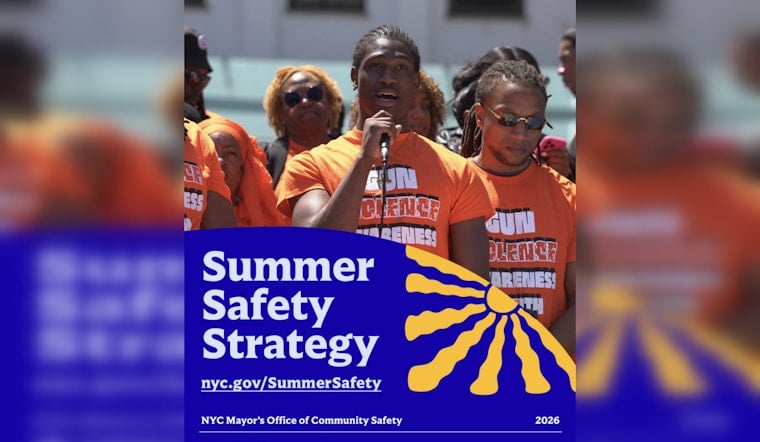
With New York City staring down a jam-packed summer that includes the FIFA World Cup, Pride celebrations and American 250 commemorations, Mayor Zohran Kwame Mamdani on July 13, 2026, unveiled a sweeping Summer Safety Plan aimed at keeping streets calm while the crowds pour in. City Hall is pairing expanded youth programs, ramped-up crisis response and coordinated public messaging with targeted public safety deployments, describing it as a whole-of-government push that tries to juggle prevention, rapid response and crowd management all at once.
What the plan prioritizes
According to the administration, the plan revolves around three main themes: Safe Summer Gatherings, Supporting Young People and Preventing Violence. Officials are pitching it as a mix of opportunity and protection. Mayor Mamdani said the city is “working across agencies and around the clock to deliver the safe summer that New Yorkers deserve,” while Deputy Mayor Renita Francois framed safety as “the presence of opportunity, dignity, and community.” The priorities are laid out in more detail at NYC.gov.
Where the numbers stand
City leaders are leaning on recent crime trends as part of the sales pitch. The NYPD reports the fewest shooting incidents, shooting victims and murders on record for the first half of 2026, with 322 shooting incidents, 381 shooting victims and 122 murders. Major crime is down about 5.8% year to date, according to the department. Those figures are the backdrop for the administration’s effort to keep numbers moving in the same direction as the city’s schedule gets busier. The full statistical breakdown is available from the NYPD.
Patrols and summer deployments
The plan also leans heavily on how, and where, officers are assigned. City officials have outlined a Summer Violence Reduction deployment that concentrates uniformed presence during late-night hours in higher-risk corridors and public spaces, with more than 2,600 officers slated to work as part of that effort. That shift in staffing, paired with targeted violence-reduction zones and more foot patrols in parks and on beaches, is one of the administration’s main tactics to head off potential flare-ups. Deployment details were described in coverage from CBS New York.
Prevention, outreach and rapid response
The other big bet is on prevention and outreach. The Office of Community Safety says Crisis Management System providers will ramp up neighborhood canvassing, outreach and on-call staffing in the evenings, on weekends and during holidays, and will activate a 72-hour shooting response protocol to support victims, families and affected blocks when gun incidents occur. The administration is also pointing to a Youth Listening Tour that has reached about 1,400 students so far, an interactive Summer in N.Y.C. activities portal and an anti-gun-violence employment program that has enrolled more than 1,000 young people. Officials have added multimedia campaigns to the mix, including human-trafficking awareness messages on LinkNYC kiosks and TaxiTVs, folded into a broader Know Your Rights push. Those elements are summarized by the mayor’s office at NYC.gov.
What to watch this summer
Over the next several weeks, City Hall and community groups alike will be watching to see whether the prevention work, including jobs, youth programming and street outreach, holds steady as New Yorkers stay out later and tourist crowds swell. The mayor’s plan links those softer investments to rapid-response protocols and stepped-up police deployments. The real test will be whether shootings and murders stay low while the city tries to enjoy a very loud summer without letting public safety crack under the pressure. New Yorkers can track local updates and neighborhood programming through the city’s usual channels and community partners as major events move through all five boroughs.



