

























































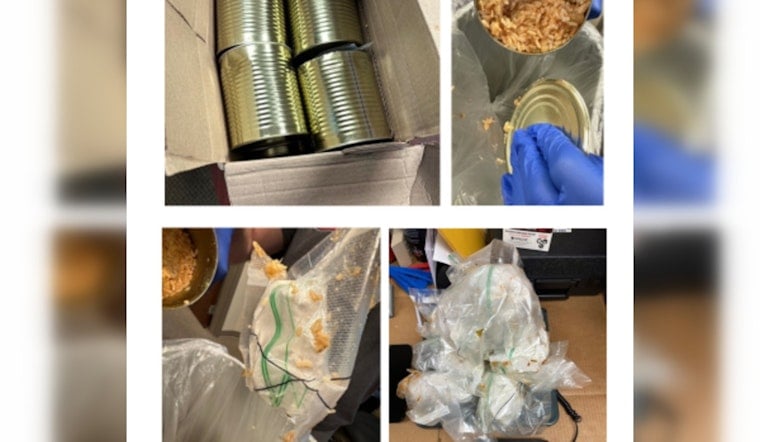
Federal prosecutors say Memphis man Antonio Caldwell, 40, is headed to federal prison for nearly two decades after a judge sentenced him to 235 months for trafficking fentanyl and methamphetamine while he was already on supervised release. Once he gets out, the sentence calls for another 10 years of supervised release. Authorities say the case grew out of a multi‑agency investigation that stretched from California into West Tennessee.
According to Action News 5, Caldwell pleaded guilty to conspiracy to possess with intent to distribute narcotics and to distribution of narcotics. Court records show investigators tracked him as a supplier of large quantities of fentanyl and methamphetamine to redistributors across West Tennessee. Investigators said he traveled to California and mailed a parcel containing three kilograms of fentanyl concealed inside rice, not exactly your typical care package. A search warrant executed in November 2023 at a house near Hollywood and Pershing turned up fentanyl, methamphetamine and three firearms, the outlet reports.
Federal push in Memphis
The U.S. Attorney’s Office for the Western District of Tennessee has been ramping up prosecutions targeting fentanyl and methamphetamine networks, securing several multi‑year federal sentences in recent months. As outlined by the U.S. Attorney’s Office for the Western District of Tennessee, these cases typically involve coordinated investigations with ATF, Homeland Security Investigations and local task forces working in tandem.
What the sentence means
Federal penalties for large‑scale distribution can be severe, and Action News 5 reports Caldwell’s punishment does not stop when he leaves prison, since his judgment includes a decade of supervised release. The U.S. Sentencing Commission notes that parole was abolished in the federal system for offenses committed after Nov. 1, 1987, so defendants typically serve most of their time, with only limited credit for good behavior.
Where the case goes from here
Prosecutors say long federal terms are meant to disrupt supply lines that fuel overdoses and street‑level violence in the Mid‑South, a strategy reflected in recent statements from the U.S. Attorney. As the U.S. Attorney’s Office has explained, these prosecutions rely on intercepts, surveillance and search warrants that trace drug shipments across state lines, aiming to hit trafficking networks at the source.





