

























































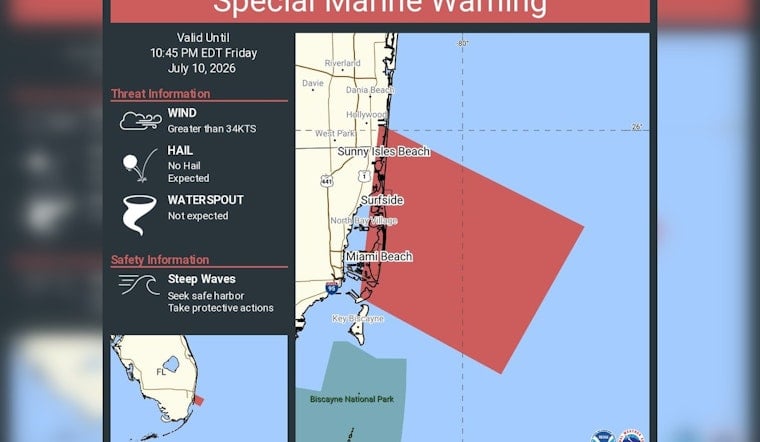
South Florida boaters got a late night jolt on Friday, July 10, 2026, when the National Weather Service office in Miami issued a Special Marine Warning for coastal waters from Deerfield Beach to Ocean Reef out 20 nautical miles, including Biscayne Bay. The advisory, in effect late Friday evening through 10:45 p.m. EDT, flagged sudden strong wind gusts and rough seas that could spell real trouble for small craft. Boat operators and waterfront residents from Surfside south through Key Biscayne were urged to take quick protective action.
On X, NWS Miami highlighted that the warning covered Surfside, Sunny Isles Beach, Miami Beach, North Bay Village and Key Biscayne, and called out winds topping 34 knots among the main threats. Forecasters told mariners to “seek safe harbor” and hold that position until storms moved through. The post went out at 02:21:53 UTC on July 11, 2026, which lines up with 10:21:53 p.m. EDT on July 10.
What The Warning Covers
On the National Weather Service marine page for the Miami forecast area, special marine warnings are described as short-fuse alerts issued when radar or reliable reports show thunderstorms capable of kicking up hazardous winds and seas, including gusts above 34 knots and the potential for waterspouts. The Miami office’s standing advice for these alerts is simple: “move to safe harbor until hazardous weather passes,” a line the agency repeats in its marine products. The AMZ651 coastal zone that runs from Deerfield Beach through Ocean Reef, which also includes Biscayne Bay, appears as a single area on the NWS Miami marine zone map.
Why Waterspouts Are A Concern This Time Of Year
The Miami forecast office notes that waterspouts are a regular feature over South Florida during the rainy season, with activity typically peaking in the summer months. These compact vortices can spin up quickly over warm coastal waters and have enough punch to overturn small boats or unleash sudden, localized bursts of dangerous wind near shore, which is why any mention of waterspouts instantly raises the stakes for people on the water.
How Boaters Should Respond
Mariners are advised to head for the nearest safe harbor, tie down or stow loose gear, make sure everyone on board is wearing a life jacket, and keep monitoring VHF Channel 16 along with official forecasts until the bad weather clears. The U.S. Coast Guard routinely tells recreational boaters to “seek safe harbor” when hazardous marine warnings go up and warns that search and rescue operations may be limited when conditions turn severe. If there is any doubt, the guidance is to delay departures and keep checking updated products from the Miami forecast office.
For up to the minute information, boaters should watch the NWS Miami feed, check the marine forecast for their specific zone, and pass along any severe weather reports to authorities once they are safely ashore. Local marinas and charter operators typically reshuffle schedules quickly when these short-fuse warnings pop up, so anyone planning to head out should be ready for late night or early morning changes.





