

























































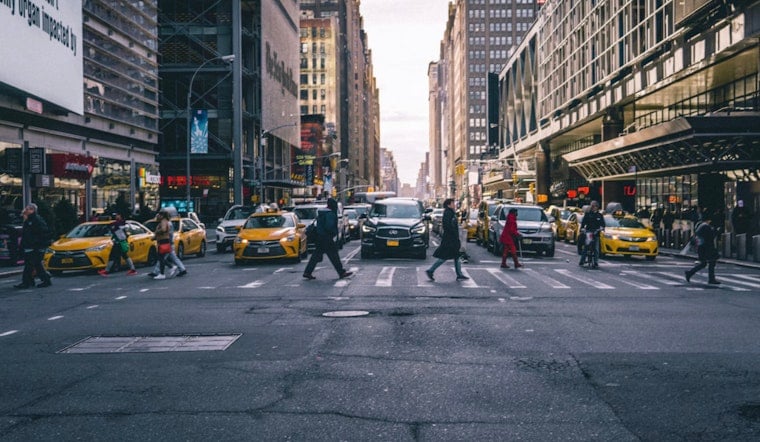
New York City streets are on track for their safest year yet for people on foot, with pedestrian traffic deaths hitting a record low in the first six months of 2026, according to city data.
From January through June 29, 46 pedestrians were killed in traffic crashes, the fewest in any first half-year since Vision Zero launched in 2014. That is a 13% drop from the 53 pedestrian deaths recorded in the first half of 2025, even as the overall number of traffic fatalities in the city ticked up slightly to 94 in the same period, city figures show.
The Department of Transportation released its midyear numbers this week and reported that pedestrian deaths have reached an all-time low for the first half of 2026. According to NYC DOT, a combination of targeted street redesigns, automated enforcement and data-driven engineering is largely behind the improvement.
Breakdowns by travel mode show 46 pedestrian deaths, three bicyclist deaths and 16 deaths among people in motor vehicles in the first half of 2026, with another 18 deaths among riders of e-bikes, mopeds and other motorized scooters, according to amNewYork. That means fatalities tied to micromobility devices outpaced those involving traditional bikes, a trend safety planners say still needs focused attention.
“No New Yorker should fear walking to school, biking to work, or driving to visit a loved one,” DOT Commissioner Mike Flynn said, as reported by amNewYork. Annie Levers, director of the mayor’s Office of Operations, told reporters that the recent gains stem from agencies “working together, using data to identify challenges and act on them,” according to the same outlet.
What’s Driving the Drop
City officials are pointing to specific corridor redesigns as proof that their approach is working. On streets such as Seagirt Boulevard in the Rockaways and East 180th Street in the Bronx, DOT reports that pedestrian injuries and crashes declined after the city installed protected lanes and other traffic-calming features.
According to NYC DOT, those corridors have seen roughly double-digit percentage drops in injuries, a result the agency cites as evidence that engineering changes, not just ticket-writing, are delivering quantifiable safety gains.
Advocates Push for More Action
Safe-streets advocates are cheering the midyear progress while warning against complacency. Groups such as Transportation Alternatives and Families for Safe Streets say the city still needs to finish long-delayed safety projects and crack down harder on chronic speeders if it wants to keep the numbers trending downward.
They have urged state lawmakers to approve the Stop Super Speeders proposal and related measures in this year’s budget, arguing that stronger tools against repeat dangerous driving, paired with fully built-out redesigns, are essential to hold on to the gains, according to Transportation Alternatives.
Citywide fatality counts are preliminary and drawn from NYPD reports, and the DOT’s Vision Zero dashboard notes that mapping issues and classification limits can affect the tallies. Those caveats are detailed in Vision Zero View.
What happens next will depend heavily on Albany and City Hall. Whether state legislators sign off on the Stop Super Speeders measures, and how quickly the Mamdani administration moves to clear the backlog of stalled redesigns, will shape whether this midyear winning streak holds through the rest of 2026. Budget moves can be tracked through the New York State Senate.





