

























































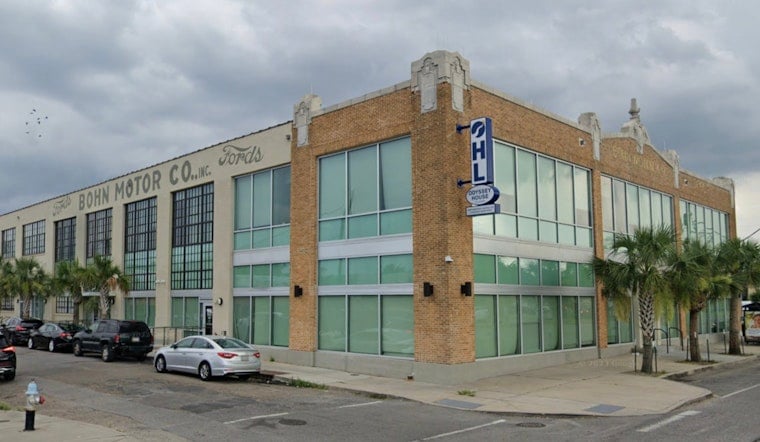
A nonprofit tied to Odyssey House has snapped up the landmark Bohn Motor building — better known to most locals as the old Bohn Ford building — on South Broad, locking in control of the rehabbed property that has served as a treatment and clinic hub for Central City since it reopened in 2019.
According to NOLA.com, the Homer Foundation — described in reporting as Odyssey House’s fundraising arm — closed last week on the roughly 43,000-square-foot property, paying about $8 million and taking on more than $1.2 million in outstanding state debt, per court records. The seller was a partnership that included Odyssey House, the Gulf Coast Housing Partnership and the Rhodes family’s real-estate firm.
Historic rehab turned treatment hub
The Bohn building dates to the 1920s and was designed by noted New Orleans architect Emile Weil. It was converted into treatment, clinic and retail space in a nearly $18 million historic-rehab project completed in 2019, according to Biz New Orleans.
Steady tenant, expanding reach
Odyssey House has been the building’s primary tenant since the 2019 reopening, operating residential treatment units along with a federally qualified health center and an on-site pharmacy, according to 504HealthNet. Edward Carlson told NOLA.com that owning the building was always part of the organization’s long-term plan and said the foundation will keep offering the same services at the site.
How the rehab was financed
The rehab relied on a mix of federal and state historic tax credits, New Markets tax credits and disaster-recovery CDBG dollars, with gap financing from the New Orleans Redevelopment Authority, according to city redevelopment records. Developer and community partners on the project included the Gulf Coast Housing Partnership and Rhodes Commercial Development, which helped steer the adaptive reuse of the long-vacant showroom.
What this could mean for the neighborhood
The purchase gives Odyssey-linked interests more ownership stability as the city’s behavioral-health landscape shifts. Odyssey’s city-funded sobering center closed in January after budget cuts, a report noted. Leaders say owning the property will help secure inpatient beds and clinic programs, while advocates and neighbors are expected to watch closely how any changes in capacity affect access to outpatient care.





