

























































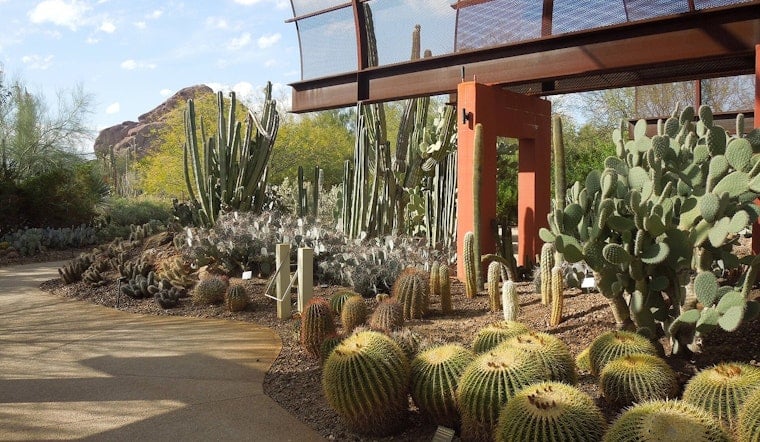
Across Phoenix, the postcard-perfect saguaro skyline is starting to sag. Towering cacti are collapsing, shedding arms, and turning an unhealthy brown in front yards and along garden trails, as yet another punishing summer bears down on the Valley. Researchers at the Desert Botanical Garden and partner universities say it is not one record-breaking afternoon that is doing them in, but a grinding pattern of hotter nights and urban heat that robs the plants of their brief window to recover.
Volunteers and staff are already logging losses and tending racks of baby saguaros, hoping that carefully raised seedlings can someday take the place of the giants that are failing under relentless, oven-like conditions.
“Now that we're seeing more and more of these heatwaves, it's kind of pushing them past their already extreme limit,” Billie Fraser, saguaro monitoring program lead at the Desert Botanical Garden, told FOX 10 Phoenix. Fraser said many saguaros are "holding their breath" as warm nights keep their pores shut and prevent the physiological recovery they need, a process the garden worries can amount to suffocation for some specimens. According to the station, garden scientists are tracking saguaros in urban plots to see how asphalt and concrete may be trapping heat and driving up mortality.
Why warm nights matter
Desert Botanical Garden scientists explain that saguaros rely on the relative cool of night to open their pores, take in carbon, and reset their water balance. When those nights stay too warm for too long, that cycle is disrupted and the plants end up dipping deeper into their stored moisture just to get by. According to the Desert Botanical Garden, saguaros under this kind of stress may drop arms, show stem wilting, and eventually snap at the base once repeated heat and drought weaken their internal support tissues. The garden’s Saguaro Initiatives, which include a community Saguaro Census and a seed bank, are designed to pinpoint which corners of the Valley are most vulnerable and why.
What the numbers say
Scientists tie the current trend to the extreme heat and drought of 2020 to 2021, an event researchers describe as an anomaly that pushed columnar cacti past their limits. A peer-reviewed review cited elevated mortality in those species after that stretch and warns that similar extremes are projected to become more frequent as the climate warms, according to PubMed Central. Local counts line up with that concern. Axios reported that the Desert Botanical Garden’s long-term monitoring showed death rates in its study plots rising from roughly 1 to 2 percent before 2020 to about 7 percent in 2023. Researchers warn that if neighborhoods do not have enough younger saguaros coming up, the loss of the big, old plants could reshape Phoenix’s cactus canopy over the coming decades.
How locals and the garden are responding
To keep that from happening, the garden and a small army of volunteers are running what amounts to a saguaro nursery network. Seedlings are grown in trays and home setups for around three years before they are tough enough to replant, and seeds are being collected and stored for long-term conservation, in line with the Desert Botanical Garden’s programs. The garden also publishes practical care guides and urges residents to shield young saguaros with partial shade or protective “nurse” plants whenever possible, and to report dead or damaged cacti to the Saguaro Census, according to Desert Botanical Garden. Staff say the arrival of monsoon rains should ease some of the immediate strain, but they caution that Phoenix’s trend toward hotter, higher nighttime temperatures is a broader, long-running test for the region’s signature giants.





