

























































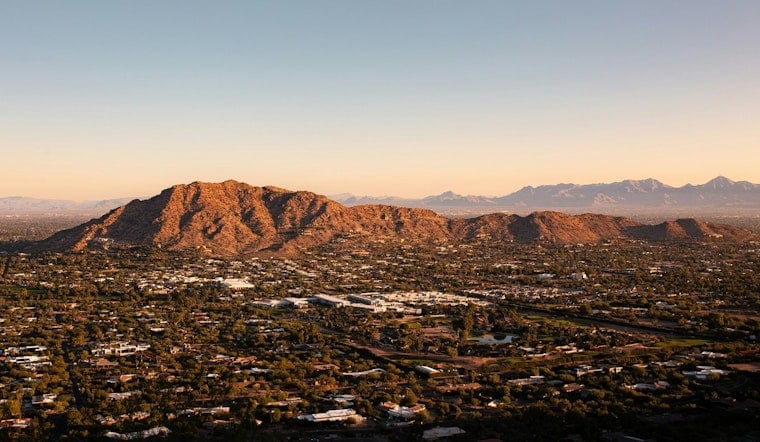
Phoenix's only helicopter equipped to hoist hikers from mountain trails is out of service as the city heads into one of its most dangerous hiking periods. Mountain rescues will continue, but some urgent extractions could now become long, exhausting carries for firefighters.
The Phoenix Police Department sent its Firebird helicopter out of state for an extended maintenance overhaul, leaving Phoenix Fire without its normal airlift option for technical mountain rescues as August begins, according to ABC15 Arizona. Captain Rob McDade said rescues that once took 30 minutes to an hour could now take as long as three hours, especially when crews must reach critically injured hikers near a summit.
Phoenix's Rescue System Relies On A Police-Fire Partnership
The unusual arrangement is a joint operation rather than a Phoenix Fire-owned aircraft. The City of Phoenix Police Department says its twin-engine Agusta A109E can use a hoist to insert rescuers and extract victims from mountains, with pilots trained alongside Phoenix Fire personnel.
Phoenix Fire is responding by adding technical-rescue personnel and limiting each member to no more than two rescues per day during the summer, ABC15 Arizona reported. The department has mapped Plan A through Plan E for every mountain in the city and can request hoist-capable helicopters from the Maricopa County Sheriff's Office or Arizona Department of Public Safety, although those aircraft are not dedicated to Phoenix Fire and may not be available. A two-skid helicopter can also ferry firefighters and equipment to some locations, while officials are urging hikers to obey trail closures, carry enough water and turn around before they are overextended.
The Timing Collides With Phoenix's Most Dangerous Heat
The outage arrives as Phoenix moves into the stretch when heat-related emergencies typically intensify. On July 9, Arizona's Family reported that Phoenix Fire had answered more than 400 heat-related calls since May 1, while Maricopa County had confirmed 18 heat deaths compared with five at the same point last year. Captain Rob McDade said July and August are historically the most dangerous months.
Mountain rescues were already running at a brisk pace before the helicopter left for maintenance. KJZZ reported in June that Phoenix Fire was approaching 80 mountain rescues for the year, a figure that included calls arising from falls and other trail emergencies.
Those calls can also stretch well beyond daylight hours: Hoodline's account of two night rescues on Camelback described technical teams working steep, exposed routes after dark. With the Firebird unavailable for several weeks, Phoenix hikers are being asked to treat water, weather and trail-closure warnings as hard limits—not suggestions to negotiate with halfway up the mountain.





