

























































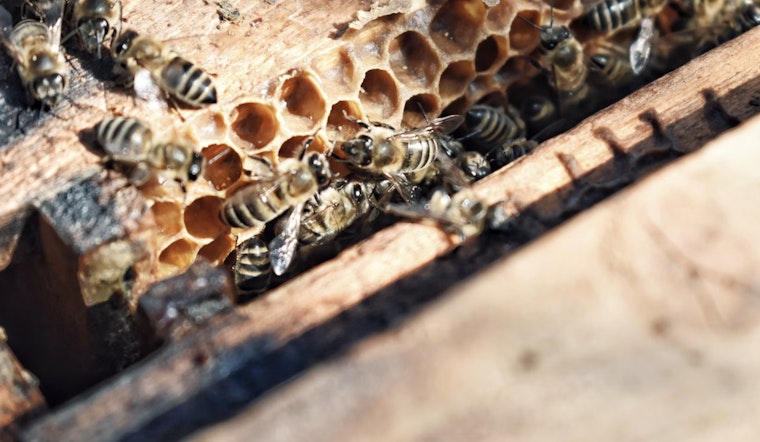
A routine early-July morning in Deerfield Beach turned horrifying in seconds when a massive swarm of honey bees swept across a family’s front yard, killing their 12-year-old pug, Max, and injuring his owner. The attack was so sudden that the dogs were engulfed in bees before anyone could pull them inside. A second family dog was rushed to a nearby animal hospital and survived.
How the Attack Unfolded
Homeowner Brian De Jesus said the family had been living with an active hive tucked under the bay window of their house for more than a year. He told CBS12 that a lavender-scented disinfectant used on the patio seemed to trigger the colony into attack mode.
De Jesus said he was stung more than 20 times. Max died later that afternoon, while the family’s other dog, Maggie, pulled through after treatment at Quiet Waters Animal Hospital.
Why Africanized Bees Can Be Especially Dangerous
Africanized honey bees are the same species as European honey bees, but they tend to respond in much larger numbers and react to a lower level of disturbance. That combination makes them far more dangerous to people and pets that get too close to a nest.
The University of Florida’s IFAS Extension notes that established colonies can be provoked by sound, movement or certain odors and advises anyone being chased to get into an enclosed shelter such as a home, shed or vehicle and to protect the face as much as possible. The Florida Department of Agriculture and Consumer Services says its inspectors, working under Chapter 586, monitor colonies and have the authority to quarantine, requeen or destroy hives when they present a public safety risk (FDACS).
Massive Colonies, Rapid Strikes
After the Deerfield Beach incident, an inspector examined the hive under the bay window and estimated that it held roughly 80,000 bees, far more than most homeowners would ever guess, according to CBS12. Extension materials note that colony size shifts with season and overall hive health and often sits around 20,000 bees in typical conditions (Purdue Extension).
Medical and extension references put the toxic threshold at roughly eight to ten stings per pound of body weight, which helps explain how a small, 15-pound dog can receive a fatal dose of venom in a fast, concentrated attack (UC IPM).
What to Do If Bees Start to Chase You
UF/IFAS guidance says that if bees begin to chase or swarm, you should immediately head for an enclosed shelter such as a building or vehicle, cover your face and airway, and resist the urge to jump into a pool or canal, since bees may linger at the surface waiting. Swatting at the insects or running into thick vegetation can make things worse.
Authorities recommend calling 911 if someone is under active attack and seeking emergency medical care for multiple stings. For hive removal, officials stress contacting a registered beekeeper or licensed pest control company instead of attempting a do-it-yourself removal.
State Rules on Removal
The Florida Department of Agriculture’s apiary program handles beekeeper registration and inspections and notes that, because of public safety concerns, inspectors can order requeening, quarantine or destruction of hazardous or Africanized colonies under state law. Homeowners who discover long-standing feral hives are urged to report them to FDACS or hire a registered beekeeper to manage removal safely.
The De Jesus family’s loss is a painful reminder that feral bee colonies can sit unnoticed for months right next to front doors and bay windows, and that small pets are especially vulnerable when those hives erupt. Neighbors and local pet owners say they now plan to treat large, established colonies as serious threats and bring in professionals instead of trying to tackle the bees themselves.



