

























































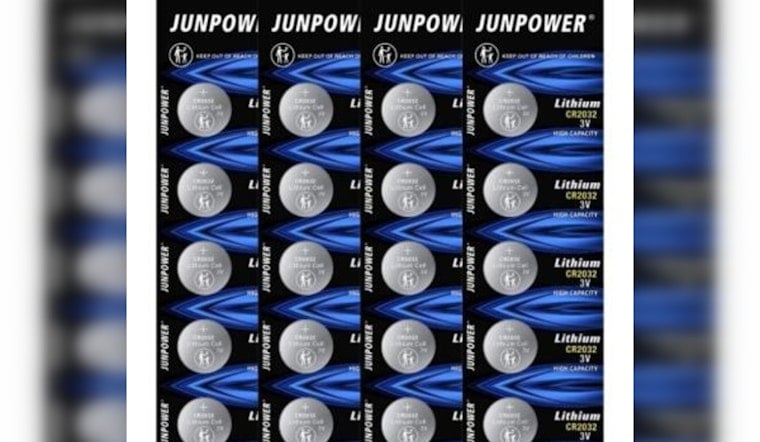
Those tiny, shiny batteries that keep remotes and toys running have landed in federal crosshairs, with regulators recalling roughly 67,000 Junpower CR2032 coin cells sold on Amazon and Chicago pediatric ER doctors warning parents not to take any chances.
The multi-pack Junpower boxes, sold between December 2023 and September 2024, did not come in the child-resistant packaging now required under federal rules. The recall includes a seller-run refund process, and local pediatric emergency specialists say the stakes are high: if a child swallows one of these coin batteries, it can cause severe internal burns, and rapid treatment can be life-saving.
According to the CPSC, the recall covers Junpower CR2032 batteries (packaging model 2023-V3) sold by the JSNJ_Tech Store on Amazon. The packs violated child-resistant packaging and labeling requirements implemented under Reese’s Law, and regulators estimate about 67,000 units were distributed nationwide.
If you have these Junpower packs at home, stop using them and keep them away from kids. As reported by NBC Chicago, consumers should contact the seller for a refund and also register through the manufacturer’s portal by filling out this recall form to request a replacement or refund.
What doctors say
A pediatric emergency physician at Lurie Children’s Hospital told NBC 5 Responds that any suspicion a child has swallowed a battery should trigger an immediate trip to the emergency department, not a wait-and-see approach at home.
"If a button battery isn't removed from the child's body within two hours of ingestion, it can start to cause chemical burns," Dr. Michelle Macy said, in comments reported by NBC Chicago. Local pediatric teams point to warning signs that include drooling, trouble swallowing, coughing or choking sounds, chest or belly pain, and vomiting, and urge families not to delay seeking care if they suspect ingestion.
Packaging rules and the bigger problem
Reese's Law created mandatory safety standards for button-cell and coin batteries, requiring child-resistant packaging or secured battery compartments, along with clearer warning labels. Those are the rules the CPSC is now enforcing in this recall. The agency’s overview of the law explains why regulators say packaging is not just a formality, but a front-line defense in preventing kids from getting their hands on loose cells. Details are outlined by the CPSC.
The risks are not hypothetical. A multicenter analysis published in Pediatrics estimated tens of thousands of battery-related emergency visits over the last decade. The findings are a big part of why regulators and hospitals keep pushing for safer packaging and faster recognition when families suspect a child may have swallowed a battery.
How to protect your family
For parents and caregivers, the safety checklist is straightforward: stop using recalled batteries, store all loose batteries locked away or up high, check remotes and small devices for missing cells, and tape over old batteries before you toss them.
If you suspect a child has swallowed a battery, call the National Battery Ingestion Hotline at 800-498-8666 or Poison Help at 800-222-1222 and head to the nearest emergency department right away. For children 12 months and older who swallowed a button battery within the past 12 hours, experts advise giving 2 teaspoons (10 mL) of honey every 10 minutes on the way to care, without delaying the emergency visit. These first-aid and hotline recommendations are summarized by poison-control authorities and detailed on Poison.org.
For full recall specifics and to register for a refund or replacement, use Junpower’s recall portal at the manufacturer's recall form. The federal recall listing on CPSC includes product photos and identifying codes so you can confirm whether a pack in your home is part of the action.





