

























































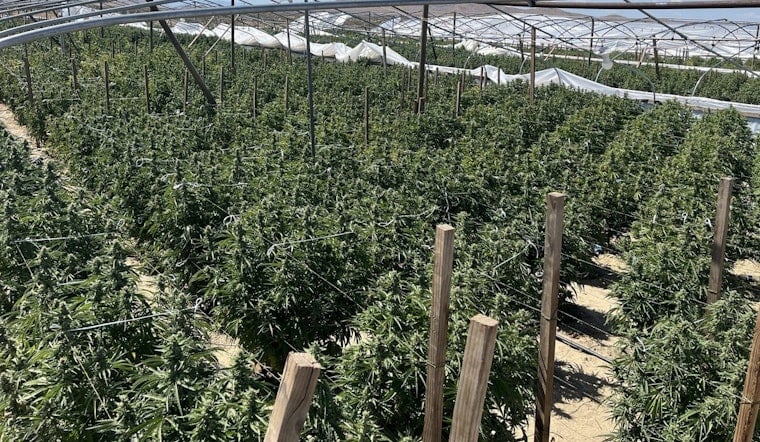
Illegal indoor cannabis grows across Southern California just took a major hit, as state and local agencies swept through warehouses and homes this spring and cleared out tens of thousands of pounds of unlicensed weed. One Riverside County operation was red-tagged for hazardous conditions, while sites in Los Angeles County turned up banned pesticides and, in some cases, firearms and suspected meth. Officials say the goal is to choke off criminal networks that exploit water, workers and public lands as part of a broader statewide enforcement push, even as arguments continue over whether crackdowns alone can tame California's massive illicit market.
According to a press release from the Governor's Office, coordinated operations by the Unified Cannabis Enforcement Task Force between April and June pulled roughly 63,204 pounds of illicit cannabis out of circulation and wiped out nearly 89,000 plants. The state says partner agencies also confiscated 17 firearms, seized more than $220,000 in cash, and made about two dozen arrests during the three-month campaign. Officials describe the focus as just as much about environmental harm, illegal weapons, and hazardous pesticides as it is about product seizures and arrests tied to organized criminal activity.
Local reporting in Riverside detailed one of the larger busts. Investigators dismantled an illegal indoor cultivation site that yielded about 2,415 plants and roughly 1,395 pounds of processed cannabis, and local officials red-tagged the building for hazardous conditions, according to MyNewsLA. Authorities said the haul included finished product that was ready for distribution and that the site posed immediate environmental and safety risks for nearby residents. Riverside agencies worked alongside state teams as part of the multiagency operation.
Environmental Risks And Toxic Pesticides
The California Department of Fish and Wildlife has repeatedly warned that illicit grow sites often rely on banned, highly toxic pesticides that can leach into soil and waterways. Its enforcement teams have documented chemicals such as methamidophos and carbofuran at illegal operations, according to CDFW. The agency also notes that unlawful water diversions, trash, and makeshift infrastructure used to support these grows damage habitat and complicate any cleanup effort. Those hazards put wildlife, downstream communities, and first responders at risk and raise consumer-safety questions about untested products that end up in the illicit market.
State officials cast the latest raids as just one chapter in an ongoing campaign. Since the Unified Cannabis Enforcement Task Force was formed in 2022, the state reports seizing and destroying more than 841,000 pounds of illicit cannabis with an estimated value above $1.3 billion. The Governor's Office said the largest recent multi-county action ran from May 14 to June 3 and involved 26 search warrants served across Tulare, Kern and Los Angeles counties. Officials say the task force pulls together state, local and federal partners to emphasize public safety and environmental cleanup alongside plant counts and product seizures.
Policy Tension: Enforcement Vs. Market Fixes
Critics warn that splashy enforcement numbers only tell part of the story. The illicit market still overwhelms the legal one, and high taxes and compliance costs can push small operators outside the regulated system. The Sacramento Bee reported on experts who estimate that illegal cannabis supply in California far exceeds what licensed growers produce, and industry groups have again pressed the state for relief on the legal side.
Last month, Governor Gavin Newsom announced $227 million in Proposition 64 grants intended to help local governments crack down on illegal grows and pay for cleanup work, as detailed in Newsom's $227 Million War Chest. The money is meant to back up enforcement with the funding needed to deal with the mess left behind.
What Officials Say
"Disrupting the illegal cannabis market is about more than seizing unlicensed products," Gov. Gavin Newsom said in a statement, emphasizing that the operations also aim to "take on criminal networks" and pull illegal firearms out of communities, per MyNewsLA. State agencies say they are trying to pair raids with public education and funding for local cleanup so that cities and counties are not left footing the bill for environmental damage.
Local officials told reporters that the extra grant money and coordinated investigations help cover gaps for long-standing problems in rural and semi-rural areas, where large-scale grows can hide in plain sight and small departments often lack the staff to keep up.
How To Report Suspected Grows
The California Department of Fish and Wildlife urges residents to report suspected illegal grow sites through CalTIP at 888-334-2258 or by texting 847411 (TIP411), and offers guidance on how to recognize trespass grows, according to CDFW. Local code enforcement and public health agencies can issue red-tag notices and pursue cleanup orders when environmental laws are violated. Officials say public tips are often the first break that leads to multiagency investigations into illicit cultivation.





