

























































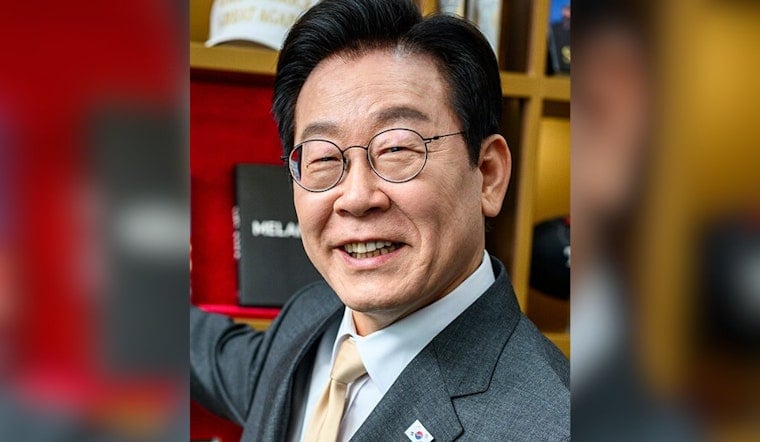
South Korean President Lee Jae‑myung hit a San Francisco stage yesterday with a very simple, very bold ask: let Korea become the indispensable supplier and live testbed for the next era of artificial intelligence. Flanked by the heads of the country’s biggest conglomerates and huddling privately with CEOs of major U.S. AI firms, Lee unveiled a compact San Francisco AI Declaration alongside a stack of memorandums of understanding. The crowd of business leaders, venture investors and researchers was a reminder that chipmaking, data centers and model infrastructure now sit at the heart of both economic strategy and high-level diplomacy, as outlined by Korea.net.
Lee framed the declaration around three "mega-projects": semiconductors, AI data centers, and physical AI, and said Seoul plans to use a mix of public investment, regulatory measures, and private MOUs to accelerate construction and talent development. The presidential office’s schedule ties the declaration to a Silicon Valley venture meetup and follow-on talks aimed at turning those MOUs into hard contracts, according to Korea.net.
Major Players, Major Money
NVIDIA and SK Group used the San Francisco summit to roll out a more than $500 billion initiative they say will link massive AI data center projects with the co-development of next-generation memory. Company statements at the event also flagged expanded plans with Naver and Brookfield to boost South Korea’s AI data-center capacity and cloud partnerships, as reported by Reuters.
The Tech Behind the Pitch
NVIDIA has been promoting its Vera Rubin rack-scale platform as the backbone for AI factories, a POD-based design the company says is ramping into production to support million-GPU clusters and agentic workloads. SK Hynix has announced mass production of HBM4, a higher-bandwidth, more power-efficient memory product that industry players say is crucial for large-scale training and inference. Those technical details come from NVIDIA and SK Hynix.
Timelines and Testbeds
As part of the package, company and government statements said SK Telecom is planning a gigawatt-scale AI cloud and a separate 2-gigawatt facility that Nvidia said would run Vera Rubin systems with HBM4 memory, with the first facilities targeted to come online in 2027. That kind of buildout raises familiar questions about siting, grid capacity and environmental permitting, even as firms promise jobs and export-heavy contracts. Roughly 150 executives, investors, researchers and startup founders reportedly came to the summit to talk MOUs and investment roadmaps, according to Reuters.
Local Stakes
For Bay Area readers, the gathering doubles as a reminder that San Francisco still functions as the crossroads for capital, policy and talent that steer AI infrastructure decisions around the globe. The region is where foreign leaders now come to sell their national AI visions in person.
Seoul’s first foreign Google AI campus and broader Korea-U.S. AI ties helped set the stage for these new partnerships, while Yonhap has detailed Lee’s arrival in San Francisco and the string of private meetings he lined up with AI chiefs.




.jpg)