

























































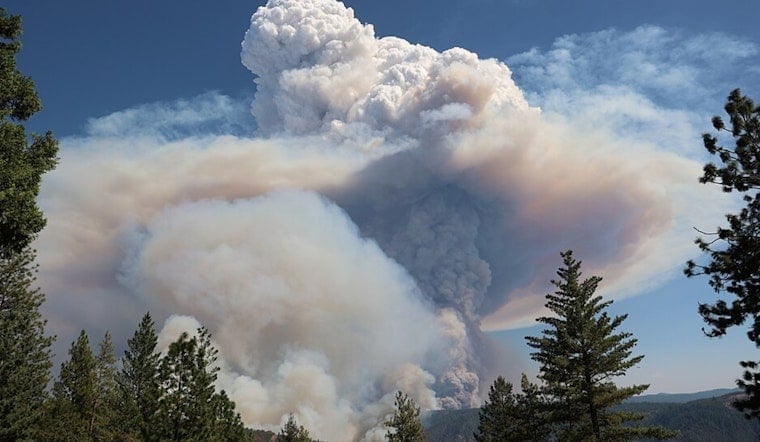
California regulators are lining up a $22 million hit on Pacific Gas and Electric over the 2022 Mosquito Fire, a proposed settlement that would send $21 million to the state and carve out $1 million for an independent review of PG&E's inspection program. The deal, now headed for a mid-August vote by the California Public Utilities Commission, comes as the utility continues to face lawsuits, local settlements, and criminal scrutiny tied to the Sierra foothills blaze. For Placer County residents and public agencies that suffered damage, the CPUC's pending decision is a narrow but very real piece of accountability.
Under the draft agreement, the CPUC's Safety and Enforcement Division says PG&E equipment violated a regulation that governs safety factors and strength standards for transmission components. The settlement would answer that finding with a financial penalty and a required outside review. As reported by CBS Sacramento, $21 million in shareholder funds would go to the California General Fund, while $1 million would pay for an independent third-party review of PG&E's transmission centralized inspection review team.
When commissioners will vote
The CPUC's daily calendar lists an Aug. 13 voting meeting in San Francisco, the kind of session where enforcement items such as settlements typically land on the agenda. If commissioners place the Mosquito Fire proposal on that calendar and adopt it, that vote would serve as the agency's formal administrative resolution in the case, according to a published CPUC document.
What regulators found and PG&E's response
Investigators with the CPUC's Safety and Enforcement Division say their probe turned up violations of rules that set minimum safety and strength requirements for transmission equipment. PG&E, for its part, has stressed in public materials that it is focused on reducing wildfire risk and hardening its system, and that resolving regulatory cases lets it aim more cash and attention at those efforts. The company outlines its ongoing wildfire safety work on its community wildfire safety program pages at PG&E.
The Mosquito Fire's toll
The Mosquito Fire ignited on Sept. 6, 2022, and ultimately burned about 76,788 acres across Placer and El Dorado counties, destroyed more than 70 structures and drove thousands of people from their homes in Foresthill and nearby foothill communities, according to incident records from CAL FIRE. Nearly a month after the fire began, federal investigators seized a PG&E transmission pole as part of a criminal probe into the blaze, as reported by The Sacramento Bee, while CBS Sacramento has also detailed the fire's aftermath.
Local settlements and infrastructure impacts
In April the Placer County Water Agency and the Middle Fork Project Finance Authority reached an $80 million settlement with PG&E to resolve claims stemming from the Mosquito Fire. PCWA says the blaze knocked one of its hydroelectric projects offline for about six months and damaged both facilities and natural resources. The settlement spells out reconfiguration work, indemnity provisions and payment terms in a public agreement released by the Placer County Water Agency.
Regulatory context
The proposed $22 million Mosquito Fire settlement comes on the heels of a series of CPUC enforcement actions aimed at forcing safety upgrades and some level of restitution. Earlier in 2024, for example, the commission signed off on a $45 million penalty in the Dixie Fire case and used administrative consent orders and other tools to lock in public safety projects. Those mechanisms, the CPUC argues, are designed to drive corrective work at least as much as they are to assign dollar amounts to violations, as outlined in a news release from the CPUC.
What's next
The Aug. 13 meeting will determine whether commissioners accept the proposed agreement as written, ask for changes or kick the case to a more formal hearing process. Even if the CPUC signs off on the settlement, civil lawsuits and federal investigations tied to the Mosquito Fire are still active, so this regulatory penalty would be only one of several tracks toward accountability and recovery for the communities that lived through the blaze.





