

























































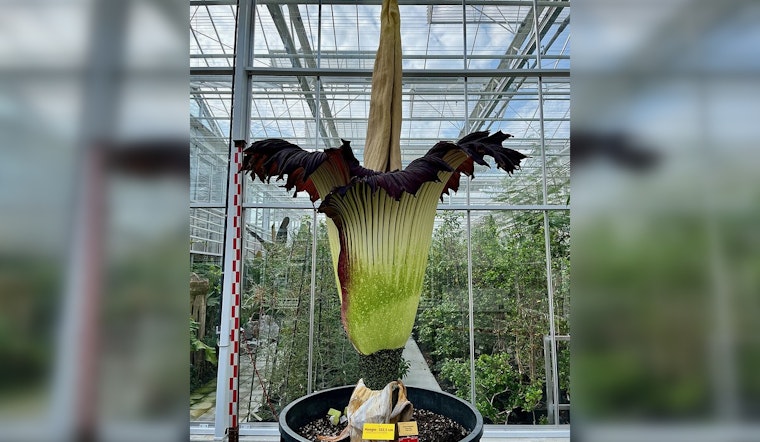
Two of The Huntington’s titan arums, better known as the infamous “corpse flowers,” are gearing up for a brief but dramatic debut that loyal plant fans know can shut down a weekend’s plans. The pair could unfurl on any night between Friday, July 10 and the middle of next week, setting up a rare double feature for in-person visitors and livestream viewers. When these giants open, the Conservatory fills quickly; previous blooms have brought out long lines and big crowds.
Announcement And Viewing Options
According to The Huntington, both Titan Arum (Amorphophallus titanum) specimens are expected to bloom in the Rose Hills Foundation Conservatory for Botanical Science in the coming weeks. One veteran plant, nicknamed Odora, last bloomed in 2024, while the second specimen will be making its public debut.
The institution says visitors can check out the plants during regular public hours, and a 24-hour livestream will be running on its corpse-flower watch page. For those who prefer to keep some distance from the smell, the livestream offers a front-row seat without leaving the couch.
Why The Smell — And How Bad Is It?
Brandon Tam, associate curator of orchids at The Huntington, did not sugarcoat it. He described the scent as an “industrial dumpster in the summertime,” according to the Los Angeles Times. In other words, not your average botanical garden perfume.
The stench has a job to do. The plant’s central spadix heats up and releases volatile chemicals that mimic rotting flesh to attract nighttime pollinators such as carrion flies and beetles, according to Kew Gardens. That intense heat-and-odor combo is exactly what turns the titan arum into both a scientific curiosity and a massive visitor draw.
A Very Short Show
Experts vary a bit on timing, but they agree on one thing: the show is fast. Kew Gardens notes that fully open blooms usually last about 48-72 hours, while the U.S. Botanic Garden describes a 2-3 day window, with the strongest odor concentrated in the first evening and the following morning.
Botanists point out that the female flowers inside the structure are receptive before the male flowers release pollen, which is why horticulturists sometimes hand-pollinate corpse flower blooms to help maintain genetic diversity. Because each plant stores energy in a large underground corm and spends years building up to a single performance, flowering intervals are unpredictable and can be separated by long stretches of leaf growth. That unpredictability is exactly why each bloom becomes an event for researchers and the public alike.
How To See It
The Huntington has laid out multiple ways to catch the action. Members at eligible levels get early-entry windows on select mornings, while general admission visitors can visit the Conservatory during regular hours. After-hours Twilight Garden Strolls on July 5 and July 12 give ticket holders a closer look as the buds finish developing.
A limited-time pop-up near the Conservatory, including a corpse-flower cookie, is scheduled for July 10-12, and the institution is encouraging the public to follow its social channels for naming contests and live updates. For anyone heading over in person, patience will be part of the experience: arriving early in the day or using member access is your best shot at a shorter wait.
The Los Angeles Times reports that thousands of people have lined up for past corpse flower events at The Huntington, and a rare double bloom could mean similarly long waits this week. Those who would rather skip the crowd can stick with the Huntington’s livestream and still catch the moment the flowers open, all without testing the limits of their sense of smell.





