

























































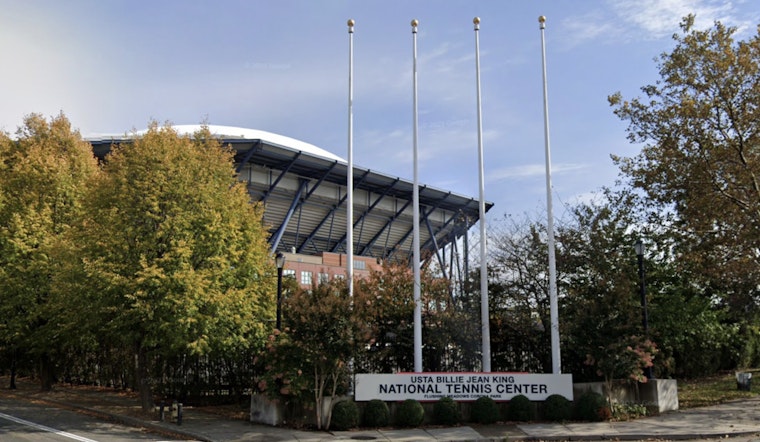
William “Slew” Hester’s children say the very tennis complex their father helped build is trying to shut them out. The family claims the U.S. Tennis Association is tearing out their longtime box at the Billie Jean King National Tennis Center, shifting a memorial plaque to a less prominent spot, and hiking prices so sharply that they can no longer afford to sit where they say they were promised.
Bill and Kathryn Hester argue that new post-renovation seat-license terms have made it practically impossible to keep the seats their father secured for them. They are asking a federal judge to enforce a decades-old settlement they say guaranteed their access and to block the USTA’s new seating rules from taking full effect.
According to court filings on Justia Dockets & Filings, William E. Hester III and Kathryn H. Hester filed suit earlier this year against the United States Tennis Association, with the case later transferred to the Southern District of New York. Their complaint asks the court for a preliminary and permanent injunction, specific performance of a 1998 settlement agreement, and compensatory damages.
The complaint on Justia Dockets & Filings says that deal granted the family “lifetime rights to attend the Open while Bill and Kathryn are alive.” The Hesters say the USTA demolished their box during recent renovations, then offered them less desirable seats priced at about $460,000 for the 2026 tournament, after their 2025 costs had already climbed to roughly $215,416, figures reported by the New York Post. Those allegations, along with supporting exhibits, appear in the public record.
USTA says it offered comparable seats
The USTA is not exactly conceding the point. The organization says it has offered the Hesters a chance to buy seats in a location consistent with their prior arrangement and maintains that it has lived up to its end of the bargain. Reporting that reviewed the public filings notes that the USTA has cast the relocated plaque and other changes as routine renovation logistics rather than any attempt to write Slew Hester out of history. CourtWatch summarized those statements and the dueling versions of events.
How Slew Hester built the center
William “Slew” Hester, the family’s patriarch and a one-time USTA president, led the 1970s push to move the U.S. Open to Flushing Meadows and transform the old Singer Bowl into what became the National Tennis Center, on a notably fast timeline. A contemporary profile in The Washington Post chronicled how “Hester’s folly” turned into a showcase venue. The Hester family now points to those deep ties to argue that the promises made to them about access should still carry legal weight.
What’s next in court
The Hesters have asked for emergency relief, including a preliminary injunction, while the USTA has fired back with motions to dismiss portions of the complaint. The case was first filed in Mississippi, then transferred to New York in May, and both sides’ filings remain under review, according to reporting that examined the docket. CourtWatch reported that the matter is moving through standard pretrial back-and-forth, with no final ruling yet on the injunction request.
Why it matters
Beyond one family’s battle over where they sit during the Open, the case could shape how “lifetime” privileges and long-standing seat licenses hold up when sports palaces are modernized and prices are reset. A win for the Hesters could push venues and governing bodies to treat old promises as enforceable property-like rights. A win for the USTA could reinforce the idea that redevelopment plans and new revenue strategies can redefine who actually gets to be in the building when the big matches are played.



