

























































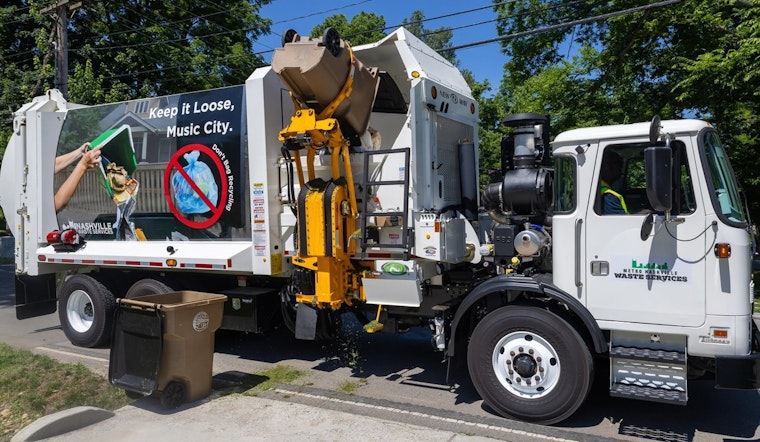
Nashville’s Department of Waste Services just hit the one-year mark on its curbside overhaul, and city leaders say the slow-moving trash trucks have been doing some fast work behind the scenes. After a year of reworked routes, new equipment, and a first-of-its-kind foam recycling pilot, officials argue the once-shaky system is finally starting to feel predictable for most households.
The big headline inside Metro Hall is control. Around 50,000 formerly contracted pickup routes are now handled by city crews, and neighbors in several pockets of Davidson County report that missed pickups are less common as the department keeps tweaking routes and staffing.
Digital routes and a new rhythm
The department has officially retired the old-school paper maps. In their place is a tablet-based Routeware system that plots every stop and tracks progress in real time, according to the Nashville Department of Waste Services. Supervisors can now see where crews are, confirm that carts were serviced and shift trucks on the fly when a route bogs down.
Staff schedules got a shakeup too. Crews are now organized into four 10-hour workdays, with regular curbside service running Tuesday through Friday. Mondays are reserved for fleet maintenance, training and catching up after holiday disruptions. “We did not just change the schedule; we built a smarter routing system that grows with the city,” Director Tracey Thurman said in the department’s rollout materials, framing the move as a long-term play rather than a quick fix.
Insourcing and the budget math
Nearly 50,000 homes that once relied on private haulers are now on Metro-operated routes, a transition city officials projected would save roughly $5.5 million per year. In an anniversary post on Facebook, the department put the figure slightly higher, at about $5.58 million in savings.
Industry publications have taken notice, describing the rapid insourcing effort as a standout municipal operations project. As reported by Waste Advantage, bringing those routes in-house has given Metro more flexibility to reshuffle crews, respond to service interruptions and smooth out rough spots on the collection map.
New trucks and foam recycling
This spring, the city rolled out nine New Way Sidewinder automated side-loader trucks on AutoCar chassis, purchased through Municipal Equipment, Inc. Officials say the ASL setup lets a single operator move quickly through denser neighborhoods while keeping workers away from traffic and cart lifting. The equipment buys and contract approvals are laid out in Nashville Department of Waste Services materials.
On the waste diversion side, the department launched what it describes as Tennessee’s first municipal foam recycling drop-off at the East Convenience Center. The site is powered by a donated Foam Cycle densifier that compresses material like packing foam into transportable blocks. The donation and partnership are documented in Metro Council records, which detail how the equipment landed in Nashville.
What this means for residents
For most Nashvillians, the changes show up in small but meaningful ways: a collection day that stays put, fewer last-minute reschedules and clearer options for bulky items and hard-to-recycle materials. The department says the new trucks will be phased into more neighborhoods through the summer as crews keep up in-service training and route tuning.
Residents are being urged to double-check their pickup day using the city’s schedule lookup tool or the Waste Services app, especially if they live in areas that have seen recent routing tweaks. Foam and bulky items can be dropped at convenience centers that accept those materials, giving residents one more outlet for the stuff that does not easily fit in a curbside cart.




