

























































On Thursday, July 23, 2026, the Hawaiʻi Department of Health warned that whooping cough, or pertussis, is rising across the islands and that infants remain the group getting hit hardest. The message was blunt and familiar: vaccination is still the best defense.
The department posted a short advisory on X urging people to get up to date on shots and reminding clinicians to test and treat suspected cases, according to Hawaiʻi State Department of Health on X. The post noted that pertussis spreads through respiratory droplets and often increases during the summer and fall, which is not exactly the kind of seasonal bump anyone is hoping for.
Whooping cough (pertussis) is a contagious respiratory illness, and cases continue to rise in Hawaiʻi. Pertussis occurs year‑round but often increases during the summer and fall. The best protection is vaccination. https://x.com/i/status/2080095551454892451
— Hawaiʻi State Department of Health (@HawaiiDOH) July 23, 2026
National Data Show Ongoing Pertussis Activity
A provisional surveillance report for 2025 recorded 28,783 pertussis cases nationwide and listed 250 cases for Hawaiʻi that year, underscoring that the state’s spike fits a larger national pattern, according to CDC. The analysis also shows that the youngest infants account for a disproportionate share of hospitalizations, highlighting how severe the disease can be for very young children.
Infants Hardest Hit, State Advisory Says
A state medical advisory issued in 2025 reported that, as of July 31, 2025, the Hawaiʻi Department of Health had identified 203 pertussis cases and that infants under 1 year old had the highest incidence, mirroring national trends, per Hawaiʻi Department of Health. The advisory urges clinicians to test early, treat promptly and consider post exposure prophylaxis for close contacts to limit spread and prevent severe outcomes.
Vaccination And Prevention Steps
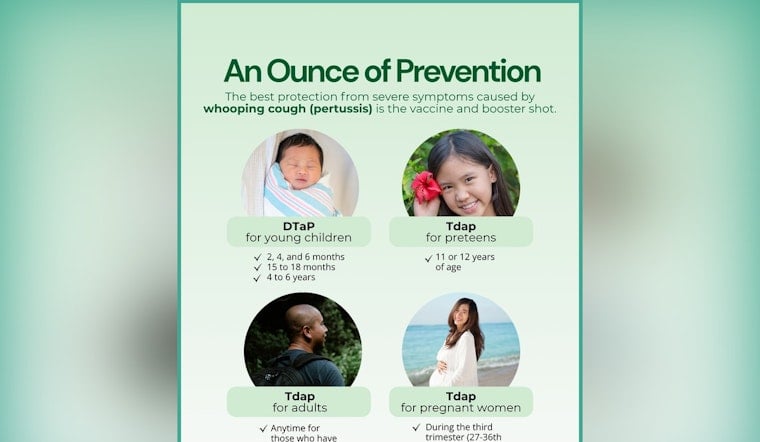
Public health guidance reiterates the routine childhood DTaP schedule, which calls for doses at 2, 4 and 6 months, with boosters at 15 to 18 months and 4 to 6 years. A Tdap booster is recommended for preteens at 11 or 12 years. Guidance also recommends that pregnant people receive Tdap during every pregnancy, preferably between 27 and 36 weeks, to pass protective antibodies to newborns, and that adults who have never received Tdap get a dose as well, as outlined in CDC vaccine guidance.
If a child develops a prolonged cough, vomiting after coughing or trouble breathing, health officials advise contacting a healthcare provider right away. Clinicians are reminded to report suspected or confirmed pertussis cases to the disease investigation branch, as specified in the state advisory. The ongoing concern about rising cases and slipping vaccination coverage was already on the radar in 2025, when a previous spike prompted more aggressive outreach, per Hawaii whooping cough cases surge past 2024 totals.





