

























































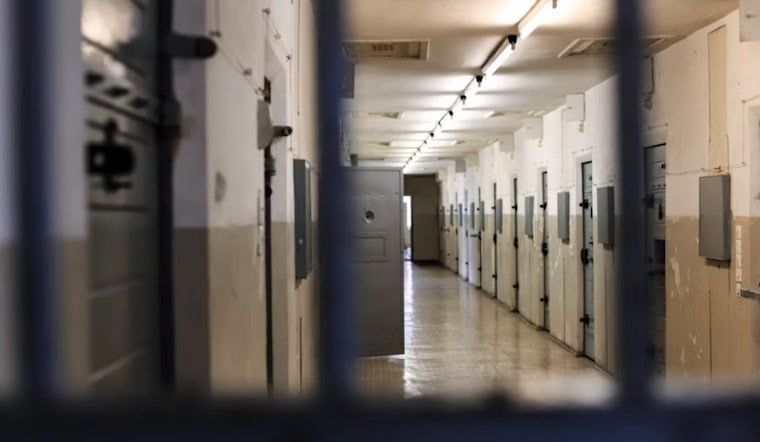
A federal judge has shut down Joshua Turnidge’s civil-rights challenge to the constant cell lighting at Two Rivers Correctional Institution, leaving the prison’s current overnight illumination rules in place. Turnidge, one of two men convicted in the 2008 Woodburn bank bombing, told the court the bright lights aggravated his PTSD and left him battling severe sleep deprivation, intense anxiety and crushing headaches. State officials answered that the lighting is there for one reason above all others: security during night checks.
As reported by The Oregonian/OregonLive, U.S. District Judge Michael W. Mosman dismissed Turnidge’s lawsuit and denied his request for immediate injunctive relief. According to the outlet, Mosman found the Oregon Department of Corrections was entitled to qualified immunity on the claims and declined to order broad changes to cell lighting under the Americans with Disabilities Act.
Court records describe in granular detail how lighting works inside Two Rivers. The "main" four-foot cell lights are routinely turned on during the mandatory 6 a.m. wake-up period through breakfast and cell cleaning, and otherwise are switched on only for short, staff-directed security checks. A secondary set of security lights stays on when the main lights are off, and corrections staff have dimmed or partially covered some of those security bulbs to cut down on nighttime brightness. Filings available on GovInfo summarize those policies and include Mosman’s conclusion that Turnidge had a low likelihood of success on the merits.
Turnidge, now 50, and his father, Bruce, were convicted in the December 2008 Woodburn bank bombing that killed Oregon State Police Senior Trooper William Hakim and Woodburn Police Capt. Tom Tennant. The pair were sentenced to death after their convictions, a history documented in local coverage from KNKX. In December 2022, Gov. Kate Brown commuted both sentences to life without the possibility of parole, a shift reported by OPB.
Why the Court Said the Claim Was Weak
Mosman’s ruling tracks a line of recent case law that makes it tough for prisoners to turn continuous-lighting complaints into automatic Eighth Amendment wins. The Ninth Circuit has said that constant illumination can cross the constitutional line in extreme situations, but later decisions, including the court’s opinion in Chappell v. Mandeville as summarized by Justia, have narrowed the circumstances in which officers lose qualified immunity over such practices.
The record in Turnidge’s case shows that the cell lights at Two Rivers are not kept at full power around the clock and that some illumination has been altered specifically for security purposes, details that weighed against his claim. Mosman’s written order, available through GovInfo, leans on that precedent as well as on light measurements and competing declarations that both sides submitted.
What Turnidge Said and What the DOC Told the Court
In his filings, Turnidge described what he called "constant 24-hour cell lighting," saying it triggered his PTSD and led to severe physical and psychological fallout, including suicidal thoughts, severe headaches and chronic sleeplessness. He framed the lighting not just as an annoyance but as a serious mental-health hazard.
The Oregon Department of Corrections, in sworn declarations, painted a different picture. Officials told the court that main lights are used for a limited morning window, that inmates otherwise control when those main lights are on, and that the security lighting is purposefully dimmed or masked so staff can make tier checks without flooding cells with light all night. Those dueling accounts run throughout the public record, with evidence summaries and declarations collected in filings hosted on GovInfo.
Where This Leaves Things
Mosman’s order shuts down Turnidge’s immediate push for a court-ordered lighting overhaul, but it does not necessarily end the broader legal fight. Civil-rights cases often lumber on through additional motions and potential appeals, and if Turnidge chooses to press on, the dispute would move to the U.S. Court of Appeals for the Ninth Circuit, where the tension between prison security protocols and inmate sleep and mental-health complaints has been a recurring theme.
For now, prison officials say their mix of dimmers, taped-over bulbs and limited morning use of the main lights is their attempt to walk a tightrope between keeping people safe and letting them get some rest, however imperfect that balance may feel from inside a locked cell.




