

























































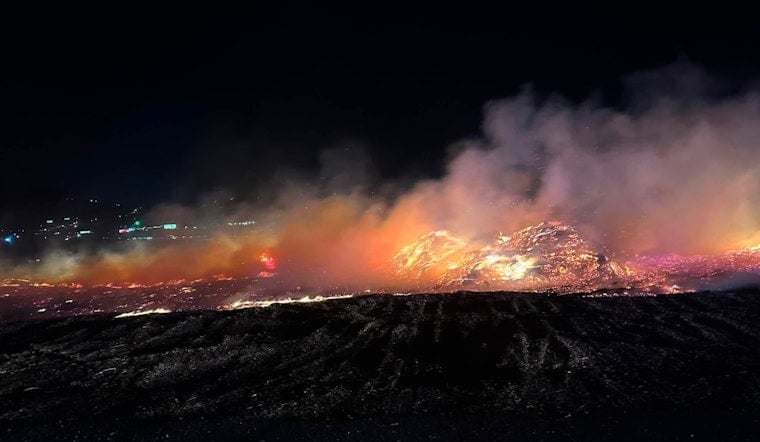
A fast-moving grass fire sparked around 3:30 a.m. Wednesday off Interstate 84 at the mouth of Weber Canyon, fanned by winds gusting up to 45 mph that pushed flames toward homes before firefighters stopped its forward progress at 30 acres. The blaze, which authorities determined was human-caused, knocked out power to nearly 2,000 Rocky Mountain Power customers and forced temporary closures on major roadways as crews scrambled to keep it from reaching structures.
The fire came to be known as the Dugway Fire because locals refer to the steep hillside grade connecting South Ogden to Uintah as “The Dugway,” a road cut into the terrain back in 1950, according to FOX 13 News. As reported by KUTV, firefighters remained on scene mopping up debris still burning in the fire's interior and monitoring containment lines, while Rocky Mountain Power had already restored electricity to affected customers by the time the outlet updated its report Wednesday afternoon.
Winds Drove Rapid Spread, But Containment Came Fast
The early morning ignition and the accompanying high winds drove quick initial spread, but firefighters reached 50% containment by 2 p.m. and pushed that to 90% by Wednesday evening, according to Gephardt Daily. The same outlet's timeline shows how a fire that looked dangerous at dawn was largely tamed within roughly 15 hours, even as it briefly threatened nearby structures. KUTV reported no known structural damage resulted from the blaze.
Emergency operations forced temporary closures on eastbound I-84 at 6500 East and northbound U.S. Route 89 at the I-84 junction, and local authorities issued voluntary evacuations along 6500 East, per the Standard-Examiner. Authorities also advised that residents should expect smoke to linger in the area and asked drivers to yield to emergency vehicles near the mouth of the canyon.
A Multi-Agency Response, Including Hill Air Force Base
Suppressing the fire required a coalition of city, county, state, and federal personnel, including specialized crews from Hill Air Force Base Fire & Emergency Services, according to a Hill AFB Fire & Emergency Services update posted to Watchduty. That kind of mutual aid has become increasingly necessary this summer: the National Interagency Fire Center raised the National Preparedness Level to 5 in August, meaning wildland firefighting resources nationwide were heavily committed, per the Utah Wildfire Explorer.
The Weber Canyon corridor has seen fire trouble before. The Standard-Examiner notes the steep terrain around Weber Canyon, and the Uintah hillside has a history of infrastructure-related fires, including a 2017 brush fire sparked by a blown electrical transformer on the same slope.
Part of Utah's Second-Worst Fire Season on Record
The Dugway Fire landed amid a historically brutal year for Utah wildfires. By mid-August, the state had logged more than 840 wildfires that burned over 532,000 acres, making 2026 the second-worst wildfire season in state history behind 2007, according to KSL. Although up to 85% of the state's wildfires earlier in the summer were human-caused, a mid-summer surge in monsoonal lightning storms had pulled that statewide share down to 51% by mid-August, the outlet reported.
Research from Utah State University points to a broader ecological factor behind fires like this one: decades of fire suppression combined with invasive flammable grasses have built up heavy fuel loads across Utah's wildland-urban interface, lengthening fire seasons and intensifying fires near residential communities, according to Utah State University extension research. To address the aftermath of fires statewide, Utah officials announced an $18 million recovery initiative this month to fund multi-year restoration projects in burned areas, aimed at managing post-fire risks like flooding and watershed damage, KSL reported separately.
What exactly sparked the Dugway Fire in the early hours of Wednesday morning remains unclear; authorities have determined the cause was human-related but have not detailed the specific activity involved. For now, firefighters remain on scene extinguishing hot spots and watching containment lines as smoke continues to settle over the Weber Canyon area.





