

























































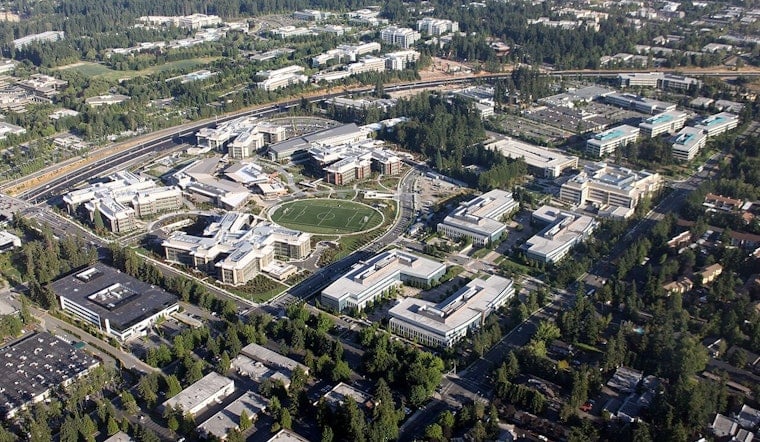
One year after police arrested dozens of demonstrators outside Microsoft's Redmond headquarters, the organizers behind those protests say the company still has not done what they demanded: sever its ties to the Israeli military. Former Microsoft software engineer Hossam Nasr, an organizer with No Azure for Apartheid, was among those arrested at two separate protests last August, and he says the fight is far from over.
The protests trace back to an encampment that Microsoft workers, former employees, and community activists set up on the company's East Campus in August 2025, according to KIRO 7 News. Demonstrators also held a sit-in at the office of Microsoft President Brad Smith and organized kayak protests in front of Microsoft executives' waterfront homes that same month. Nasr, who is a former Microsoft software engineer, told the station that direct action and escalation have produced some wins against large corporations, but that the campaign's core demand remains unmet.
Ahmed Shahrour, a former Amazon software engineer who was among the protesters arrested last August, has remained active with No Azure for Apartheid and has worked to rally other technology workers to join the cause. Shahrour said protesters can pressure Microsoft executives through access to information and communications, framing the tactics as a way to keep the issue in front of company leadership even after the arrests fade from headlines.
The Origins of the Standoff
The conflict between Microsoft and its critics didn't begin with the encampment. Microsoft fired Nasr and data scientist Abdo Mohamed on October 24, 2024, hours after the two organized an unauthorized lunchtime vigil at Redmond headquarters honoring Palestinians killed in Gaza, according to The Guardian. Hoodline previously quoted Nasr as an organizer months before that termination, when he took part in a Seattle march calling for a ceasefire and criticizing tech giants' contracts with Israel.
Internal corporate communications later disclosed that in August 2025, a Microsoft security official contacted the FBI seeking intelligence on planned employee demonstrations, specifically highlighting Nasr's social media activity, according to Business & Human Rights Resource Centre. Protesters claim Microsoft technology was used for mass surveillance during the war in Gaza, a contention that has driven the escalating pressure campaign against the company.
What the Investigation Found
Microsoft's internal investigation into its Israeli defense contracts followed a 2025 joint investigation by The Guardian, +972 Magazine, and Local Call revealing that Israeli intelligence Unit 8200 stored millions of intercepted Palestinian phone calls on Microsoft's European Azure cloud servers. As of July 2025, media investigations found the Israeli military had stored more than 11,500 terabytes of surveillance data — roughly 200 million hours of audio recordings — in Azure data centers in the Netherlands and Ireland, according to the Business & Human Rights Resource Centre.
Microsoft cut some cloud services to the Israeli military unit in September 2025 and, in June 2026, published a final report summarizing its investigation and outlining steps to strengthen governance and oversight. The company said it had concluded its investigation into the alleged use of its technologies for mass surveillance of civilians by the Israeli Ministry of Defense, and it established a process allowing employees to anonymously report concerns through the Microsoft Integrity Portal.
Leadership Shakeup in Israel
The fallout also reached Microsoft's Israeli subsidiary. In May 2026, the company forced out general manager Alon Haimovich along with several senior managers after an internal probe determined the subsidiary had exposed Microsoft to ethics violations and European regulatory liability over Palestinian surveillance, per the Times of Israel. Earlier this month, Microsoft named former Nvidia Israel country director Nati Amsterdam as Haimovich's replacement, according to Globes.
Organizers Say Reforms Fall Short
Despite those changes, protest organizers say Microsoft still needs to cut ties with the Israeli military entirely. No Azure for Apartheid, which has worked with current and former Microsoft workers throughout the campaign, has sought to get Microsoft to cut all contracts with the Israeli military rather than adjust individual services or reporting channels.
Nasr told KIRO 7 that standing up and speaking truth to power is the least organizers can do, and he said people have power and agency and should not accept their labor and tax dollars being used for alleged crimes. Nasr also contrasted the arrests protesters have faced with the toll on Palestinians in Gaza, framing the risk to demonstrators as minor by comparison.
Wider Pressure and Open Questions
The No Azure for Apartheid campaign builds on the broader No Tech for Apartheid movement, which began in 2021 protesting Google and Amazon's joint $1.2 billion Project Nimbus cloud computing agreement with the Israeli government. In May 2026, a coalition of human rights organizations including Access Now, Amnesty International, and the Electronic Frontier Foundation issued a joint demand calling on Microsoft to publicly disclose the full findings of its legal review, warning of potential corporate legal liability under international law, according to Access Now.
Whether European regulators will scrutinize Azure's host data centers in Ireland and the Netherlands remains unresolved, as does whether Microsoft's new Integrity Portal will meaningfully protect future whistleblowers or simply generate further friction with employees. For organizers like Nasr and Shahrour, the one-year mark since the East Campus arrests is less an anniversary than a marker of unfinished business at Microsoft's Redmond, Washington headquarters.



