

























































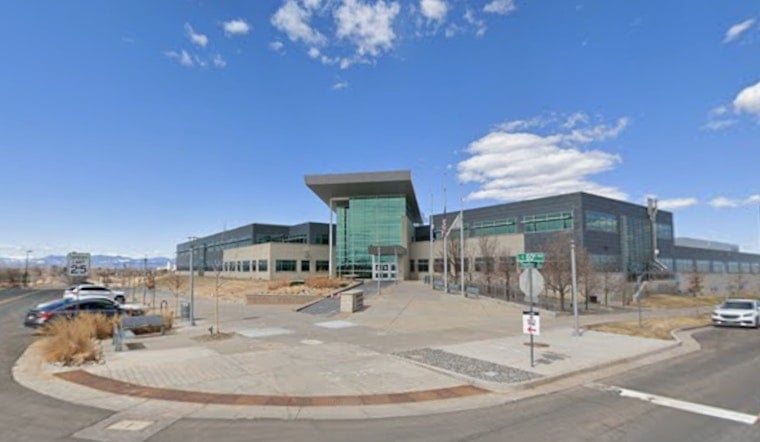
Roughly 100 Adams County residents packed a meeting room at the Anythink Wright Farms library, demanding that local elected officials take a harder line against the wave of data center proposals sweeping the region. The gathering, organized by the Adams County chapter of the Democratic Socialists of America, drew both Thornton Mayor Jan Kulmann and Commerce City Mayor Steve Douglas as attendees pressed for opposition to the massive computing facilities and raised pointed questions about potential conflicts of interest among the officials tasked with regulating them.
The Saturday meeting came just two days before the Commerce City Council is set to hold a first reading on an ordinance that would impose a six-month moratorium on data center site development, a vote scheduled for Monday. As reported by Denver7, Douglas attended the community meeting and said he wanted to see what happens at the Commerce City Council meeting before commenting further, while declining an interview about the proposed moratorium and data centers generally. Douglas also cited his position as a United Power board member when the topic of conflicts of interest came up.
Residents Demand Answers on Water, Noise and Wildlife
DSA representatives presented information about data centers built in other parts of the country, walking attendees through concerns tied to water usage, power usage and noise, according to Denver7's reporting. Kai Pegg, who lives in Brighton, told the outlet she wants to protect her city, its animals and its residents. Oliver Stanton raised concerns about the facilities' effects on infrasound, agriculture, wildlife and pets.
Chris Cook, another attendee, said data centers have a bad track record of damaging communities and described potential Adams County facilities as huge megaplexes that drain resources. Cook said he is concerned about what data centers in Adams County could mean for his daughter, and cited figures indicating the facilities can lose 60 to 80 percent of reclaimed water. A separate figure attributed to Same Barnes at the meeting put water use at 5 million gallons per day. Attendees also raised questions about conflicts of interest involving data centers and the elected officials who oversee them.
Mayors' Utility Ties Draw Scrutiny
The scrutiny is rooted in dual roles held by two of the region's most prominent officials. Kulmann, who did not attend the Saturday meeting, is chief operating officer of United Power, the Brighton-based electric cooperative that serves Adams County. Douglas sits on United Power's board. The cooperative operates a large-load interconnection policy requiring developers of projects exceeding 10 megawatts — the threshold for hyperscale data centers — to pay upfront hardware, design and engineering costs rather than receive economic development rate discounts, according to Big Pivots.
Kulmann told Denver7 that her electric utility industry experience can help inform decisions about data center impacts, and said she will evaluate the issues based on facts and the best interests of Thornton residents. She noted that Thornton has nine city council members bringing different professional experiences and perspectives to the table, and said she is subject to the same ethics and conflict-of-interest requirements as any other elected official, adding that she will recuse herself if a situation requires it.
The stakes for ratepayers are not abstract. United Power raised residential rates effective January 1, pushing fixed monthly charges from $19 to $22, demand charges from $4 to $4.55 per kilowatt, and energy charges from 10.57 cents to 11.84 cents per kilowatt-hour to fund system maintenance and grid infrastructure, per the cooperative's own rate change notice. Statewide, Xcel Energy reported in early 2025 that it had received data center interconnection requests totaling 5.8 gigawatts — nearly matching its existing 6.2 gigawatts of generating capacity in Colorado — prompting plans for $22 billion in infrastructure investment and the elimination of economic development rate discounts, Big Pivots reported.
A Regional Patchwork Without State Rules
The Thornton meeting lands amid a broader scramble by Front Range municipalities to write their own rules after state lawmakers failed to act. In May 2026, the Colorado General Assembly saw two competing data center bills die in committee — HB26-1030, which would have offered tax exemptions for investments of $250 million or more, and SB26-102, which sought mandatory clean energy sourcing — according to Rocky Mountain Real Estate Law. That left cities to navigate the industrial proposals largely on their own.
Commerce City's council already voted 7-0 on August 17 to direct staff to draft the six-month moratorium ordinance now headed to Monday's first reading. Thornton's council held its own study session on July 7, weighing a moratorium of up to 18 months and directing staff to research water, energy and land-use impacts. Denver went further, passing a one-year moratorium in May and assembling a 20-person advisory panel this month to rewrite zoning rules before a May 2027 deadline, as Hoodline detailed in its coverage of Denver's panel.
Not every metro city has taken the same path. Aurora's council narrowly voted 6-5 against a proposed six-month pause, opting instead to fast-track targeted rules including a ban on evaporative cooling systems within 35 days, a split Hoodline covered in its report on Aurora's rejected moratorium. Meanwhile, the rural Town of Bennett in eastern Adams County has gone the opposite direction entirely, soliciting developers in October 2025 for a 102-acre data center campus at Muegge Farms, capping water use at 30,000 gallons per day while coordinating with CORE Electric Cooperative to supply up to 164 megawatts of power.
The grassroots pressure now stretches beyond Thornton and Commerce City. In Brighton, residents launched a petition in July demanding a municipal moratorium and opposition to non-disclosure agreements after consulting documents revealed city officials had already begun preliminary talks with developers. Together, the moves across Adams County and the wider metro area amount to a coordinated wave of local intervention aimed at getting ahead of developers before comprehensive zoning standards are in place.



