

























































Alamo Drafthouse is bringing back one of Hollywood's boldest and most short-lived studios this September, screening an uncut version of Basic Instinct alongside a 4K restoration of Terminator 2: Judgment Day at its Bay Area theaters. The series, called “When Carolco Was King,” spotlights Carolco Pictures, the independent studio that spent the 1980s and early 1990s bankrolling some of the era's biggest action spectacles before collapsing into bankruptcy in 1995.
The lineup runs across Alamo Drafthouse's three Bay Area locations in Mountain View, Santa Clara and San Francisco, according to The Mercury News. Beyond the uncut Basic Instinct and the restored Terminator 2, the schedule includes First Blood, plus The Doors on September 14 and Angel Heart on September 15, both drawn from Carolco's catalog. The Mercury News reports the theater chain describes the series as a chance to revisit films from a studio that built a reputation as one of Hollywood's most fearless production companies.
A Studio Built on Big Bets
Carolco Pictures was founded in 1976 by Mario Kassar and Andrew G. Vajna and operated for roughly two decades before shutting down, per the same Mercury News report. The studio's best-known titles include First Blood, which introduced Sylvester Stallone's character John Rambo, along with Rambo: First Blood Part II in 1985 and Rambo III in 1988. Its catalog also stretched into other genres, with credits including Terminator 2: Judgment Day, Total Recall, Universal Soldier, Field of Dreams and The Doors.
Carolco's rise was built on a financing gamble few studios attempted at that scale. According to TCM, the company pioneered a foreign “pre-sales” strategy, selling international distribution rights territory by territory to raise upfront capital before films were even released domestically, allowing an independent outfit to fund budgets that rivaled the major studios. That approach helped the company chase after the biggest stars in the business, and it paid handsomely for the privilege.
Record Paydays for Action Icons
Carolco's willingness to spend became legendary. Per the Los Angeles Times, the studio paid Stallone $16 million for 1988's Rambo III and handed Arnold Schwarzenegger $15 million for 1991's Terminator 2: Judgment Day, sums that reshaped what action stars could command. Two years earlier, Carolco had won an intense bidding war for a different kind of talent, paying screenwriter Joe Eszterhas a record $3 million for the Basic Instinct script, which he had reportedly written in under two weeks, according to Wikipedia.
That investment produced one of the era's defining thrillers. Despite censorship edits to avoid an NC-17 rating and public protests during filming, Basic Instinct grossed $353 million worldwide on a $49 million budget in 1992, making it the fourth highest-grossing film globally that year, per Wikipedia's account of the film's release. It's the uncut version of that film that Alamo Drafthouse is bringing back to Bay Area screens this month.
The Collapse That Followed
The same aggressive spending that built Carolco's empire eventually broke it. Mounting debt forced the studio to cancel several high-profile projects in the mid-1990s, most notably Paul Verhoeven's medieval epic Crusade, starring Schwarzenegger, after its pre-production budget soared past $100 million in 1994, according to the Los Angeles Times. The studio filed for Chapter 11 bankruptcy protection in November 1995, shortly before releasing the swashbuckler Cutthroat Island, which Collider reports lost an estimated $147 million in inflation-adjusted dollars and became one of the largest box-office bombs in cinema history. Carolco closed for good in 1995.
Where to See It in the Bay Area
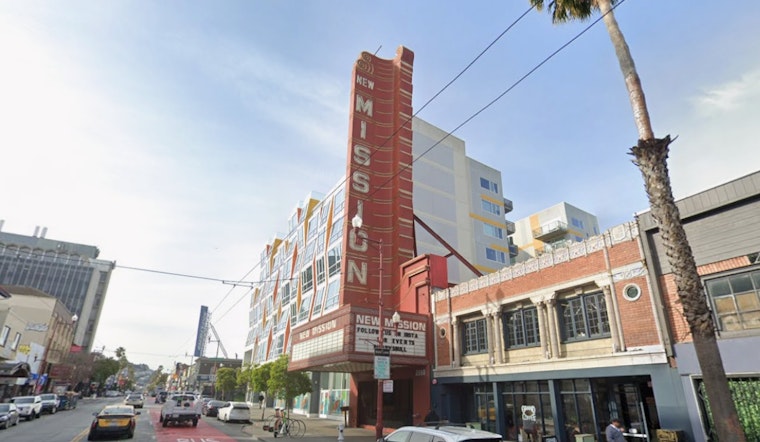
South Bay audiences gained easier access to Alamo Drafthouse's repertory programming after the chain expanded into the region in June 2025, opening two 10-screen locations at The Village at San Antonio Center in Mountain View and Westfield Valley Fair in Santa Clara inside former Showplace ICON sites, as reported by Axios San Francisco. That expansion built on Alamo's original Bay Area foothold, which began in December 2015 when the chain restored and reopened San Francisco's historic 1916 New Mission theater, a milestone Hoodline reported on at the time.
The chain now operates under the corporate umbrella of Sony Pictures Entertainment, which acquired Alamo Drafthouse in June 2024 and placed it within a newly created division called Sony Pictures Experiences, according to Sony's own announcement of the deal. The acquisition followed the sunsetting of the federal Paramount Consent Decrees, a shift that reopened the door for major studios to own cinema chains directly for the first time in decades. For Bay Area film fans, that corporate history is mostly backdrop; what matters this September is a rare chance to see an uncut erotic thriller and a restored 1990s action landmark on the big screen, courtesy of a studio whose ambition once outran its balance sheet.





