

























































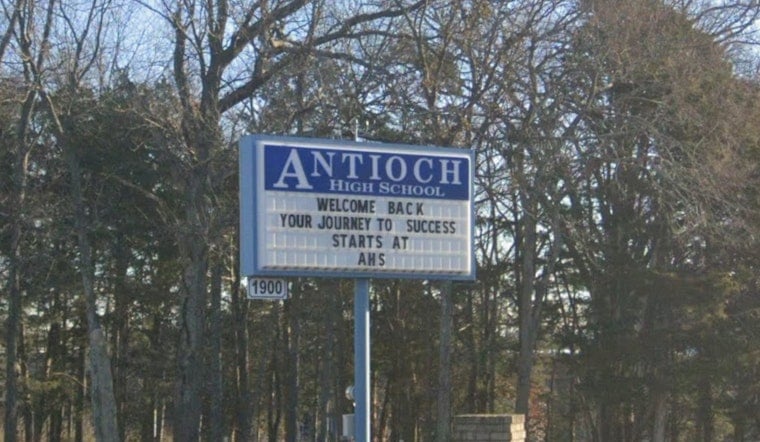
Antioch High School went into lockdown Thursday morning after someone phoned in a threat against the campus, triggering a building-wide police search before officials determined there was no real danger. Students and staff were held in place while officers swept the school, and the lockdown was lifted a short time later once the threat was cleared.
The Metro Nashville Police Department investigated the threat and searched the building, according to WSMV. Sean Braisted, a spokesperson for Metro Nashville Public Schools, said the threat was determined to be a hoax and that students and staff were safe throughout the incident. “All threats are reported to the police and investigated accordingly,” Braisted said, per the outlet's report.
A Campus Still Carrying the Weight of Tragedy
Thursday's scare landed on a campus that has already endured more than its share of trauma this year. Antioch High School was the site of a fatal shooting on January 22, 2025, when 17-year-old student Solomon Henderson opened fire in the cafeteria, killing 16-year-old Josselin Corea Escalante and injuring another student before taking his own life, according to a Wikipedia account of the shooting. That history has left the school community especially sensitive to any sign of danger, and it helps explain why police move so quickly whenever a threat surfaces there, as Hoodline noted in its coverage marking the shooting's one-year anniversary.
In the days after that shooting, Metro Nashville police saw a wave of copycat threats ripple across the district, arresting three students in unrelated cases just one day later, the department said in a statement posted to Nashville.gov. Thursday's incident was not even the first major disruption at Antioch High School this year outside of that anniversary. In May, the school was locked down as part of a coordinated statewide swatting wave that hit more than half a dozen Middle Tennessee high schools, according to 3B Media News. During that wave, the Tennessee Department of Safety and Homeland Security and the Tennessee Highway Patrol deployed state officers alongside local police to sweep affected campuses across multiple counties, per a report from Williamson Source.
How Threats Get Reported and Assessed
Metro Nashville Public Schools relies on dedicated district-level Threat Assessment Teams and de-escalation centers to evaluate safety threats and maintain student safety plans, with an aim toward avoiding unnecessary student arrests, according to the district's own safety and security materials. That framework now operates under a newer legal backdrop: in April, the Tennessee General Assembly passed legislation requiring school officials to evaluate whether a threat of mass violence is credible before reporting students to law enforcement, WPLN News reported.
Even so, the underlying criminal exposure for hoax threats remains severe. Under Tennessee Code § 39-16-502, intentionally initiating or circulating a false report of an active shooter, bomb, or other emergency that interrupts public building operations or triggers a law enforcement response is a Class C felony, according to Justia Law. Separately, Hoodline has reported that a state transparency law now requires school principals to notify parents by the end of the school day whenever any classroom or building is evacuated or locked down for any reason.
Part of a Wider Pattern Across Tennessee
Thursday's hoax was not an isolated event even within the day. A nearly identical scenario played out at a high school in neighboring Rutherford County, where a phoned-in bomb threat also triggered a lockdown that ended with no danger found, as Hoodline reported on the same day. The recurrence of these hoaxes fits into a broader national pattern of cyber-enabled swatting: in May, federal prosecutors and the FBI announced charges against a juvenile tied to a cybercriminal network accused of orchestrating nationwide active-shooter swatting calls, including an August 2025 hoax call at the University of Tennessee at Chattanooga, according to UTC News.
The stakes behind these hoaxes are underscored by state and federal data on real violence. FBI figures released for 2025 showed active shooter incidents nationwide rose 42% to 34 events, with Tennessee ranking among the top states after recording two active shooter attacks, in Nashville and Memphis, Hoodline has reported. For a campus already marked by loss, each new lockdown — even one resolved as a hoax within hours — adds to a cumulative strain on students, families and staff who have grown accustomed to bracing for the worst.





