

























































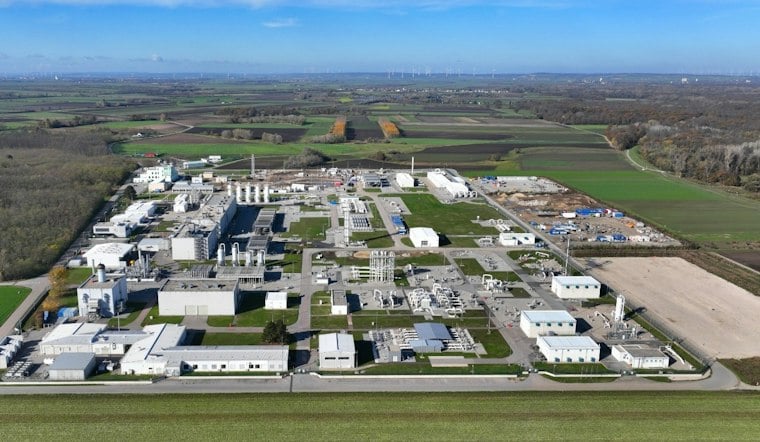
Kinder Morgan is advancing plans for a natural gas pipeline that would cross 10 Tennessee counties, part of a sprawling 470-mile system stretching from Sumner County into Georgia. The project, called the Southeast Connector, includes about 150 miles of proposed pipeline in Tennessee alone, with Kinder Morgan estimating the Tennessee portion could cost roughly $1.3 billion.
The pipeline would be developed by Southern Natural Gas, which is owned equally by subsidiaries of Kinder Morgan and Southern Co., according to WZTV. Kinder Morgan itself is a company that owns and operates long-distance energy pipelines, and it has described the Southeast Connector as a response to growing natural gas demand that could support development in areas with limited gas infrastructure. As reported by Main Street Media of Tennessee, the Tennessee route is expected to traverse Sumner, Macon, Trousdale, Smith, DeKalb, Cannon, Warren, Coffee, Franklin and Marion counties. WSMV, however, describes the route differently, reporting it crosses Middle Tennessee counties including Sumner, Wilson, Smith and Macon — a discrepancy that underscores how unsettled the alignment still is.
Route Still Subject to Change
Kinder Morgan has said the precise route will be determined only after environmental surveys and meetings with landowners, the station notes. The proposed route could still shift during review, and the project has not been approved by the Federal Energy Regulatory Commission. The Southeast Connector would connect existing pipeline systems and would not directly serve homes as a new neighborhood gas line — meaning its arrival in a county does not equate to new residential hookups.
That distinction matters because household effects on gas service and bills have not been established in the evidence available, and Kinder Morgan has not provided details showing additional gas available to local customers or any residential price changes. The plan includes compressor stations that pressurize gas to keep it moving along the route, the station's report adds.
Jobs, Costs and a Federal Timeline
Kinder Morgan's November fact sheet estimates the full project — spanning multiple states — could cost about $7.6 billion, with the company's own share estimated at roughly $3.1 billion. The Tennessee-specific $1.3 billion estimate comes with no provided calculation details, the station reports. Company projections point to about 7,000 temporary construction jobs and just 50 permanent positions across the entire project, a gap that has drawn attention from WSMV.
Kinder Morgan plans to request entry into FERC's pre-filing process by the end of 2026 and submit a formal application by the third quarter of 2027, according to the same station. The company is targeting construction starting in late 2028, with phased service beginning by late 2030 — a timeline also confirmed by WKNO FM. FERC's review process, per the agency, is designed to be open and public, giving agencies, landowners and the public opportunities to raise concerns before any decision is made, according to the Federal Energy Regulatory Commission.
A Pipeline Sized for Big Industrial Demand
The scale of the project reflects broader pressure on Southeast gas infrastructure. WPLN reports the pipeline is expected to carry at least 2.6 billion cubic feet of gas per day, with possible capacity up to 3.5 billion cubic feet daily, running through a 48-inch-diameter line — physically larger than the industry average. The Tennessean reports the pipeline would affect roughly 760 Tennessee landowners.
Analysts at East Daley have scrutinized who would actually use that capacity. The firm estimates only about 0.75 billion cubic feet per day of data-center demand is likely to materialize across the entire Southeast Connector footprint, even as Kinder Morgan asks Southeast utilities to commit to at least 1 billion cubic feet per day apiece. East Daley notes that power plants across the six states the pipeline would serve burned 8.5 billion cubic feet per day in 2025, up only slightly from 2020, even as Southern utilities have signed around 17 gigawatts of large-load agreements, including a 3.2-gigawatt OpenAI campus near Savannah, Georgia. Separately, RBN Energy has observed that pipeline capacity into and through the Southeast has barely kept pace with regional gas-demand growth.
Local Impacts Already Taking Shape
County-level reporting shows how the project is already reshaping conversations in individual communities. In Macon County, a local report from the Lebanon Democrat indicates the route could run about 17 miles and potentially affect up to 78 property owners. In Coffee County, the Tullahoma News reports the proposed path covers roughly 25 miles, crossing near Rock Road and Asbury and passing east of Hillsboro.
A similar dynamic has already played out in Georgia, where Southern Natural Gas has proposed a separate project known as Southern System Expansion 4, which would add to the company's 7,600-mile network, according to The Atlanta Journal-Constitution. That outlet reported a route change there shifted the pipeline from crossing four landowners' properties along an existing easement to crossing just one — adding about 1,400 feet to the line, according to landowner Donnie Peek. It's a reminder that in Tennessee, too, the map residents see today may not be the one crews eventually build.





