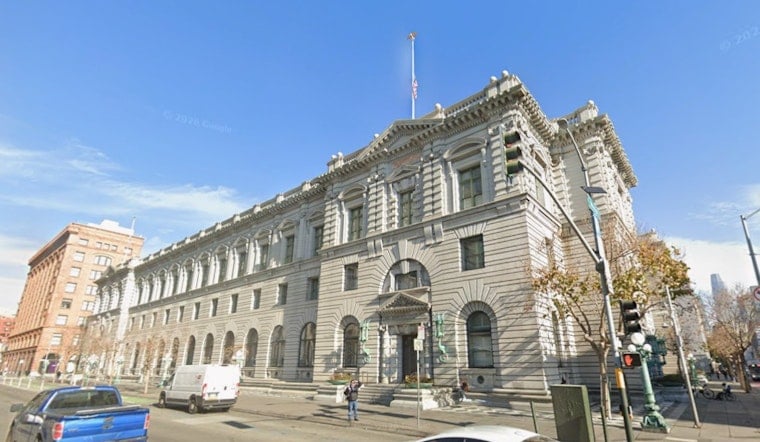
A federal appeals court has revived a Justice Department subpoena demanding patient and personnel records from QueerDoc, a telehealth clinic that provides gender-affirming care to patients including minors diagnosed with gender dysphoria. Friday's ruling marked the first time a U.S. appeals court has upheld a subpoena from the Trump administration's Justice Department targeting hospitals and clinics that provide gender-affirming care to minors.
The decision from the San Francisco-based 9th U.S. Circuit Court of Appeals reverses a lower court order that had blocked the subpoena, according to Reuters. The subpoena sought patient records, billing information, personnel records, and other data from providers of transgender health care to minors, and it was part of a wave of similar demands the Trump administration issued to hospitals and clinics across the country, per the same report. The Justice Department has argued its subpoena seeks records so it can investigate potential federal offenses, though it gave no immediate response to a request for comment on the ruling.
QueerDoc, founded by family medicine physician Dr. Crystal Beal, operates as a trans- and queer-led online telemedicine clinic offering gender-affirming care, including puberty blockers and hormone therapy, across multiple U.S. states, according to Marketplace. Beal established the virtual clinic to reduce healthcare discrimination and expand remote access to specialized care, per the same outlet. QueerDoc brought the underlying lawsuit challenging the subpoena, and a lawyer for the clinic had no immediate comment following the ruling, the Reuters report notes.
What the Federal Subpoena Actually Demanded
The scope of the records the Justice Department sought was extensive. As reported by The Advocate, the subpoena requested unredacted patient names, birthdates, Social Security numbers, diagnostic records for minors prescribed puberty blockers or hormone therapy, staff personnel files, and communications with drug manufacturers. QueerDoc refused to comply, citing patient privacy and confidential medical records.
The demands were issued under Section 248 of HIPAA, codified at 18 U.S.C. § 3486, a statute that grants federal law enforcement broad authority to subpoena documents in investigations of potential federal healthcare offenses without prior judicial approval, according to the Civil Rights Litigation Clearinghouse. QueerDoc was among more than 20 medical clinics, telehealth platforms, and children's hospitals across the country served with similar administrative or grand jury subpoenas seeking patient and operational records tied to transgender care for minors, the Advocate reported.
How the Case Reached the 9th Circuit
U.S. District Judge Jamal Whitehead in Seattle had originally quashed the subpoena, ruling that a seattle federal judge wrongly concluded — in the 9th Circuit's later characterization — that the subpoena was issued in bad faith. Many lower court judges around the country similarly blocked Justice Department demands targeting providers of gender-affirming care to minors, according to Reuters.
Judge Carlos Bea, who was appointed by former President George W. Bush, wrote the panel's opinion, stating that the president may direct the DOJ to exercise its statutory authority in a manner that aligns with his broader policy goals. Judge Daniel Bress, appointed by President Trump, joined Bea's opinion. Judge Richard Paez, appointed by former President Bill Clinton, dissented, writing that the DOJ used the threat of criminal investigation to pressure health care providers to stop offering gender-affirming care.
Case Sent Back to Seattle, Not Resolved
Crucially, the 9th Circuit did not order QueerDoc to produce the subpoenaed documents. Instead, the panel sent the case back to Judge Whitehead in Seattle, where he will now rule on QueerDoc's arguments that the subpoena is overbroad and would impose an undue burden on the small clinic, Reuters reported.
The legal fight traces back to Executive Order 14187, titled Protecting Children from Chemical and Surgical Mutilation, which President Trump signed January 28, 2025. According to the White House, the order directed the Justice Department to prioritize investigations into gender-affirming treatments for minors under 19 and to cut funding for medical practices surrounding youth gender transitions.
Medical Groups and State Officials Weigh In
During March 2026 oral arguments before the 9th Circuit, DOJ attorneys contended that QueerDoc could act as a key witness in federal investigations into pharmaceutical manufacturers over the off-label marketing of puberty blockers and hormone therapies under the Federal Food, Drug, and Cosmetic Act, according to Courthouse News. The DOJ argued the lower court had ignored QueerDoc's potential role as a third-party witness to drug company violations, the outlet reported.
That theory drew pushback from national medical authorities. The American Academy of Pediatrics filed an amicus brief in January 2026 supporting QueerDoc, arguing that off-label prescribing of medications is standard, evidence-based, and lawful in pediatric care and gender dysphoria treatment, according to Democracy Forward. The group warned that broad subpoenas chill access to essential medical care and threaten physician-patient confidentiality.
California Attorney General Rob Bonta led a coalition of 21 state attorneys general in filing an amicus brief the same month asking the 9th Circuit to affirm the quashing of the subpoena, describing the DOJ's actions as a bad-faith misuse of subpoena power, per the California Attorney General's office. The coalition argued federal prosecutors were using administrative subpoenas to intimidate clinics rather than investigate genuine healthcare crimes.
Washington's Shield Law and What Comes Next
Washington state, where QueerDoc is based, enacted House Bill 1469 in April 2023, a shield law protecting healthcare providers and patients from out-of-state and federal subpoenas, investigations, or civil liability related to reproductive and gender-affirming care, according to Washington State House Democrats. The law was designed to shield local clinicians from external legal threats, though the 9th Circuit's ruling now sends the underburden question back to Judge Whitehead for further review.
The fight over QueerDoc's records fits into a broader pattern of federal subpoenas targeting institutions that provide gender-affirming care, an issue Hoodline previously reported in the context of Bay Area families fighting a similar federal subpoena aimed at Stanford Children's Hospital records. Whatever Judge Whitehead decides on remand, the case is likely to shape how far other federal courts will let the Justice Department reach into clinics' confidential patient files.