

























































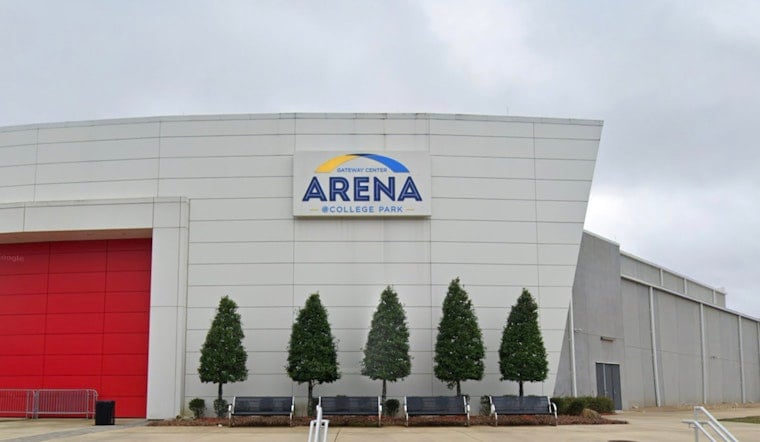
A mother and her 17-year-old daughter say Atlanta arena security called their t-shirts offensive and ordered them to cover up or leave during overtime of Sunday's Indiana Fever-Atlanta Dream game, the latest flashpoint in a season-long fight over Sophie Cunningham's comments on trans athletes in women's sports. Kasey Thomason and her daughter Annie were sitting three rows back at Gateway Center Arena when, they say, security singled them out over the XX-XY Athletics shirts they wore in support of Cunningham and what they described as protecting women within women's sports.
According to the New York Post, which first reported the incident, Kasey said they were told by arena security to put on tan Atlanta Dream Wellness Night t-shirts over their own or be escorted out of the building. The pair, who paid $1,000 each for their tickets, claim a nearby fan wearing a Protect Trans Rights shirt alerted security to their attire. Broadcast footage from the ESPN telecast, examined by The Spun, shows Kasey and Annie holding the tan Dream shirts in the closing minutes of overtime before pulling them on over their XX-XY gear with about a minute and a half left on the clock.
Atlanta security described the shirts as offensive, per the Post's report, while a fan wearing the Protect Trans Rights shirt was separately told to zip her jacket over her own message. The Fever went on to beat the Dream 97-91 at Gateway Center Arena, but the final score was overshadowed by the attire dispute that has now followed Indiana's road trips to five different cities this season.
A Season of Traveling Rallies Since Cunningham's ESPN Interview
The uproar traces back to a July 21 ESPN profile in which Cunningham, now 30, said female athletes “shouldn't have to go against biological men” in sports or locker rooms, according to GO Magazine. She has said she wants to protect young girls against biological men, per her ESPN interview. That single comment set off a chain of arena demonstrations that Hoodline has tracked across the league's map: outside Climate Pledge Arena in Seattle in a July rally backing Cunningham, then Minneapolis, then Chicago, before landing in Atlanta.
At Target Center in Minneapolis on August 2, Lynx head coach Cheryl Reeve wore a shirt reading “Trans Kids Belong” beneath her jacket during a game against the Fever, briefly speaking with Cunningham at midcourt before tipoff. Days later, a fourth rally co-organized by advocacy group XX-XY Athletics hit the United Center in Chicago ahead of a Sky-Fever matchup. Gateway Center Arena's own fan code of conduct bars clothing or signs displaying derogatory characterizations toward any person, giving venue staff the authority they invoked against the Thomasons.
Sales Spike for the Shirts at the Center of the Fight
The apparel itself has become part of the story. XX-XY Athletics, founded in March 2024 by former Levi Strauss brand president and 1986 U.S. national gymnastics champion Jennifer Sey, saw a sixfold surge in sales during August after viral attention around Cunningham's remarks, Front Office Sports reported. Sey has said she launched the brand to challenge what she calls corporate hypocrisy around women's athletic categories.
The controversy has also spilled into league governance. Former NBA players Enes Kanter Freedom and Royce White announced on August 7 that they plan to declare for the 2027 WNBA Draft by self-identifying as women, an explicit challenge to the league's eligibility guidelines, according to CBC Sports. Article XIII, Section 1(a) of the WNBA's Collective Bargaining Agreement states that “only players who are women are eligible to play in the WNBA,” but the agreement does not define the term or set requirements around biological sex or hormone levels, per Forbes.
League and Union Response
WNBA commissioner Cathy Engelbert said, per an internal memo, that the league will approach trans-athlete participation thoughtfully, respectfully, and in alignment with league values. A WNBA spokesperson separately said the league denounces efforts to demean or marginalize others. The league's anti-hate task force, made up of general managers and team presidents, found no immediate eligibility matters affecting the league, and the WNBA has noted that its player eligibility rules differ from those of some other leagues and governing bodies and remain collectively bargained.
The Women's National Basketball Players Association issued a formal statement in August rejecting attempts to use players as “political pawns,” according to The Guardian, while emphasizing that protecting women's sports and fostering inclusion are complementary values. The debate is unfolding as other governing bodies, including the WTA Tour and the International Olympic Committee, have reviewed or announced plans in 2026 to implement genetic sex testing policies, according to Front Office Sports — a sign that Atlanta's shirt dispute is one local flashpoint in a much larger international reckoning over sports eligibility rules.




